1

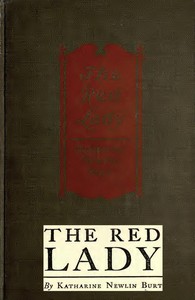
The Red Lady — A Closer Reading
(0 User reviews)
292
Project Gutenberg
2015
Not confirmed
North Carolina -- Fiction; Mystery fiction; Housekeepers -- Fiction
Readers of public-domain and historical texts
Project Gutenberg digital edition
en
Edition facts
Words
53,371
Reading time
233 min
Text sections
6
The catalog record for The Red Lady — A Closer Reading provides practical reading context through 53,371 words, 3 hr 53 min estimated reading time, and 6 detected text sections.
The text analysis averages about 15.7 words per sentence, while the detected sections provide another way to judge how the source is divided.
Project Gutenberg metadata also associates the work with “North Carolina -- Fiction,” connecting these edition facts with the source record’s subject description.
Source:
Project Gutenberg record #50090
Janice Gale, a desperate red-haired housekeeper, arrives at The Pines in North Carolina to work for the reclusive Mrs. Brane. She soon senses an uncanny presence in the house, leading to a tense psychological mystery involving suspicion, divided identity, and a detective-lover who questions her sanity.
Editorial Edition Score
4.7/5
★★★★★
★★★★★
Calculated from edition completeness, EPUB availability, text structure and catalogue metadata. Not a user rating.
How this score is calculated
- Description quality20 pts
- Title & short description10 pts
- Source metadata20 pts
- Text length15 pts
- Chapters / structure15 pts
- EPUB file integrity20 pts
Total of 100 points, scaled to a 2.5-5.0 range. Editions with an empty description or a missing EPUB file are not scored.
Edition quality
Read the Text
enough and not unnatural under the circumstances. If I remember rightly I decided that if the awful figure came again or if any other tragedy should happen at “The Pines” I should kill myself. Fortunately my reason, though badly shaken, did at least reassert itself. After all, I am not a natural believer in ghosts. The supernatural has never greatly interested or impressed me. It is not so much-that I am skeptical as that I am pragmatic--that is, I have to discern some use or meaning in spiritual experiences. It is this turn of mind, inherited, I think, from my French father, that saved me now. Very gradually, as I knelt there in that God-given attitude of prayer, an attitude whose subjective benefit to the human race no one will ever be able to measure, an attitude which, in its humility, in its resignation, in its shutting out of this world's light, so opens the inner eyes of the soul--as I knelt there, my mood began to change from one of insane superstition and fear to one of quiet and most determined thought.
In fact, my reason reasserted itself and powerfully. One by one, all the alarming incidents began to link themselves together, to suggest a plan, a logical whole. It was as though, with my eyes shut and hidden in my hands, I saw for the first time.
Three housekeepers, one after the other, had been frightened away from “The Pines.” The old servants of the house had been forced, also by supernatural fears, to leave. A most determined attempt had been made against Robbie's nerves and Mary's courage. And now, at the climax of the crescendo--for then it seemed to me, God forgive me! that my experience had been worse than Robbie's death--I, the fourth housekeeper, was being terrified almost out of my wits. All these things pointed to one conclusion. It was somebody's interest to isolate little Mrs. Brane. It was especially somebody's interest to frighten every one away from the northern wing. Somewhere in this house, and presumably in this part of the house, there was something enormously valuable, something to tempt evil spirits clad in substantial flesh and blood, as substantial, for instance, as that of the bolster-like figure of the Baron. And the leader of this enterprise, the master-spirit, was a hell-cat with red-gold hair and a face like my own.
This was a horrid thought in itself and almost an incredible one, but it was, at least, not supernatural. The creature that had seemed to rise up on the threshold of the bookroom was a living being, a woman of flesh and blood. I repeated this over and over to myself. I felt that I must possess my mind perfectly of this fact and lay hold of it so that no future manifestations might so nearly drive me to distraction as the manifestation of to-night. She was a real woman, a female criminal, wily and brave and very cunning. She had deliberately made use of this extraordinary chance resemblance, had artfully heightened it, had copied my habitual costume, for excellent reasons of her own. It was probably entirely by her agency that I had been brought to “The Pines.” With a blinding realization of my own stupidity I remembered the suspicious fashion in which I had learned of the position--a slip of paper handed to me on the street! I had been chosen deliberately, for my resemblance, by this thief for a double purpose of mystification and of diverting suspicion. What more convenient for a night-prowler than to possess a double in some authorized inmate of the house? Night-prowler?--why, she might walk up and down the house in broad daylight, and, providing only that she was careful not to be seen simultaneously with me, nor at too close intervals of time at an unreasonable distance from my known whereabouts, she might stand at Mrs. Brane's elbow or flit past Mary down the stairs or go through the kitchen under Sara Lorrence's very nose.
The narrator, Janice Gale, opens by emphasizing the "prolonged, sustained, baffling discomfort" of her position at The Pines, a phrase that sets the tone for the entire work. She is a desperate, inexperienced housekeeper with "conspicuously golden-red" hair, hired under odd circumstances: a stranger delivers an unsigned note directing her to apply. The story is told in first person, and the reader is immediately placed inside Janice's memory of a "raw, colorless day" and her physical sensations of cold, hunger, and exhaustion. This sensory grounding, combined with the mystery of the anonymous message, establishes a pattern of unease that pervades the narrative.
A Housekeeper's Precarious Position
Janice's role as housekeeper is central to the plot, but the excerpts reveal that her position is anything but ordinary. She is hired by Mrs. Brane, who is "very much out of health" and leaves every detail to her. The household is small, yet Janice quickly senses "something in the house"—a presence that is not explicitly named in the provided text. The chapter titles hint at escalating mystery: "Something in the House," "A Strand of Red-Gold Hair," "The Russian Book-Shelves," and "The Secret of the Kitchen Closet." Janice's own hair color, mentioned twice in the excerpts, becomes a motif; she wonders how it "could possibly keep its flame" under her conditions, and later a strand of red-gold hair appears as a clue. Her physical appearance seems to draw attention and perhaps suspicion, linking her to the unexplained events.
Love, Suspicion, and a Divided Self
The excerpts include a charged confrontation between Janice and a man she calls "Master Detective-Lover." He accuses her of having a "divided personality," asking if she knows what she does "after you have gone to sleep." Janice's internal response reveals a complex psychology: she wants to triumph over him, to humble him, yet she also loves him. She reflects that "love is a cruel sort of madness, a monster perfectionist," and she resents that he could be so easily deceived. The dialogue is sharp and theatrical, with lines like "our eyes met, and the looks crossed like swords." The man threatens that "one of us two will be dead" and claims he lives to make the world safe from her. This scene suggests a central tension between Janice's conscious self and a possible alternate identity, though the excerpts do not confirm whether she is a victim or a perpetrator.
The Comforting Presence of Mary
Amid the psychological turmoil, a character named Mary provides a counterpoint. After the intense confrontation, Janice meets Mary in the hall, who immediately notices how "bad" she looks. Mary speaks in a "nursey way," using comforting phrases like "Poor blessed girl!" and "Poor pretty!" She bathes Janice's face and lays a cold cloth on her temples. This moment of tenderness is striking because it is the only instance of genuine care in the excerpts. Mary's "dear, honest, trusting, truthful face" contrasts sharply with the duplicity and suspicion that surround Janice. Her presence suggests that not everyone at The Pines is hostile, and she may become an ally—or a foil—as the mystery unfolds. The excerpts do not reveal Mary's full role, but her kindness stands out as a rare moment of human connection.
The excerpts present a narrator who is both unreliable and sympathetic, caught between her own memories and the accusations of others. Readers should pay close attention to Janice's descriptions of her own feelings and physical states, as they may signal shifts in the narrative's reality. The recurring motif of hair—its color, its strand as evidence—deserves scrutiny. The incomplete text leaves open whether the "Red Lady" of the title refers to Janice, another character, or a ghost. Approach the story as a puzzle of perception, where the housekeeper's account may be the only truth—or the greatest deception.
I finished The Red Lady and couldn’t stop thinking about that quiet dread of being watched inside your own mind. It reminded me of the strange, hushed pull I felt with Annihilation — Edition Insights — that same sense of a place holding secrets and asking you to question what you see. It lingers softly, like a half-remembered dream.
There are no reviews for this eBook.
There are no comments for this eBook.
Reader reflection
How did this book work for you?
Your answers remain private and are stored only in this browser.
Your progress
0
/
10
2
Did this book hold your interest?
3
Would you encourage someone else to read it?
4
Did the language feel accessible?
5
How well did it match your expectations?
6
Did the book offer a fresh perspective?
7
How did the pace of the book feel?
8
Could you see yourself revisiting this book?
9
In one sentence, what did you learn?
10