1

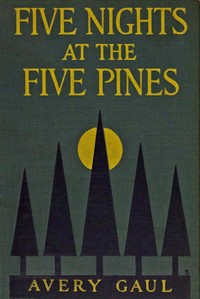
Five nights at the Five Pines — Story, Setting & Ideas
(0 User reviews)
2016
Project Gutenberg
2024
Not confirmed
Mystery fiction; Cape Cod (Mass.) -- Fiction; Dwellings -- Fiction; Wives -- Fiction
Readers of public-domain and historical texts
Project Gutenberg digital edition
en
Edition facts
Words
57,695
Reading time
251 min
Text sections
23
Five nights at the Five Pines — Story, Setting & Ideas can be approached with a clearer sense of reading commitment from its source measurements: 57,695 words, 4 hr 11 min estimated reading time, and 23 detected text sections.
The text analysis averages about 16.8 words per sentence, while the detected sections provide another way to judge how the source is divided.
Project Gutenberg metadata also associates the work with “Mystery fiction,” connecting these edition facts with the source record’s subject description.
Source:
Project Gutenberg record #73520
A mystery set in a remote Cape Cod house where a wife recounts five nights of escalating tension, marked by shifting sand dunes, a black cat, and a forbidden door. The narrative moves between vivid coastal landscapes and claustrophobic interiors, with each night bringing new discoveries.
Editorial Edition Score
4.8/5
★★★★★
★★★★★
Calculated from edition completeness, EPUB availability, text structure and catalogue metadata. Not a user rating.
How this score is calculated
- Description quality20 pts
- Title & short description10 pts
- Source metadata20 pts
- Text length15 pts
- Chapters / structure15 pts
- EPUB file integrity20 pts
Total of 100 points, scaled to a 2.5-5.0 range. Editions with an empty description or a missing EPUB file are not scored.
Edition quality
Read the Text
od the strain of the long walk better than ours, in their flimsy stockings and hot rubber-soled shoes. I wanted to sit on a log in the shady woods and rest, but no one else seemed tired and the thought of the old house lured me on to hurry to its doorstep.
It needed only that difficulty of getting possession to make me sure that this was the very house for which I had been waiting all my life. I knew, too, that the romance of the situation would be the deciding point in any opposition that I might well expect to meet from my husband, who was still in New York. Jasper was a fiction-writer, at present aspiring to be a playwright, and it was true that he needed for his work an atmosphere that he could people with the phantoms of his own mind, rather than the disturbing congestion of the apartment where we now lived. In setting out to follow Ruth’s advice and buy a house on Cape Cod, I felt that I was doing my best not only for myself and the sort of family life that I felt would naturally follow, but for my husband and his exacting career. I realized that it would be for both of us a solution of the philosophy of living. Jasper had reached that stage in the beginning of success when it seemed to his friends that he was working too hard and playing too hard, squandering his talents upon Carthaginian gods who would only burn him up in the end.
I had been following Ruth in silence, for the way through the wood was hard, but now we came into the outskirts of the fishing-village and, crossing the single railroad track that ran the length of the cape, struck the easy tread of the boardwalks. There were only two streets in Star Harbor, front and back, and, sending the children on to Ruth’s house by the back way, their pockets oozing with blueberries, we emerged to the front street and faced the bay, just as the Pond-Lily Man was passing.
He was returning from his day’s work, peddling pond-lilies up and down the cape on his bicycle, a great basket of them dripping from his arm now, their luscious white heads closed, although not wilted; and he offered them all to Ruth hopefully, to get rid of them.
“Pond-lilies,” he repeated automatically, as he saw us coming into sight. “Pond-lilies. Five cents a bunch!”
He was a thin little man with a tired face, apologetic, but stubborn about his trade, selling his flowers with a mildness and a persistence that was deceptive.
Ruth bought them all, only asking if he would, as a favor, carry them up to her cottage.
“As a favor,” he replied; “this time!”
“Pond-lilies! Pond-lilies!” he called again, as he started off, seeming to forget that we had purchased the entire stock.
“Poor thing,” said Ruth; “that cry is a habit with him. He must do it in his sleep. He used to be a parson of some sort, but his ‘health failed him’ and that’s the way he supports his family. They say his children all get out in a flat-bottomed boat on Pink Pond, down the cape, and pick them for him every morning before it is light.”
“They work hard up here,” said I, feeling rather inadequate to the occasion, which was so tremendously local.
“They do,” replied Ruth, with her usual sympathy and few words.
We paused to rest a moment by the bay. The water sparkled happily, with none of the menace that shrouded the deep blue of the ocean which we had left on “the outside” beyond the dunes. Here were merry little white-caps, as innocent as the children who played upon the flats, and before us the fishing-boats, riding at anchor, had no more flavor of adventure than so many rocking-horses. The sunlight, mirrored from the bright waves, shone upon houses at the water’s edge with a glow that turned the glass of the windows into flame and burnished the brass knockers on the doors. The white paint glistened as if it had been varnished that very afternoon, and the green blinds and the red roses climbing on the cottages were raised in tone to the height of the color of ornaments on a Christmas-tree. The whole village had the aspect of a gaily painted toy. The dust of the road was rose-tinted. The leaves of the trees looked as if they had been scrubbed and polished, and the sails of the vessels on the bay were as white as the clouds that skipped across the bright blue sky.
The opening chapter of Five Nights at the Five Pines immerses the reader in a landscape of static dunes described as "tawny breakers" and "purple shadows," establishing a setting that is both barren and menacing. The narrator, a wife newly arrived at a remote Cape Cod house, immediately confronts a hostile environment: a storm approaches, a box of books is dumped in the road, and a black cat that had vanished reappears. The cat's pursuit leads her to a forbidden door, which she inadvertently opens, climbing steep steps into darkness. This sequence—from sweeping coastal description to a tight, interior confrontation—sets the pattern for the novel's structure, where each night brings a new, contained crisis.
A Landscape of Suspended Motion
The novel's opening pages devote unusual attention to the dunes surrounding the Five Pines. The sand is described in geological terms: "high hills, carved by the bitter salt winds into tawny breakers," their curves "static" yet "menacing." This is not a passive backdrop but an active presence, shifting silently and gradually, capable of leveling a path overnight. The narrator notes that "the very footsteps one followed" could vanish, suggesting a world where stability is illusory. The ocean is heard as "a repeated threat," and the cape itself is figured as a "prehistoric sea-monster" drying its hide. This imagery of suspended motion—waves that never break, dunes that move without seeming to—creates a tension that mirrors the plot's slow-burn revelations. The landscape is not merely atmospheric; it functions as a character in its own right, its indifference to human activity underscoring the narrator's isolation.
The Cat as Catalyst
A black cat appears early and becomes a focal point of the narrator's anxiety. When it re-enters the house during the storm, she reacts with disproportionate violence: "I leaped upon the creature as if it was the cause of all my troubles." She pursues it with a poker, and it leads her to the forbidden door. The cat is described as "the reincarnation of some sinister spirit," its eyes green, its tail waving "high above it." This is not a realistic animal but a symbol of the house's hidden threats. The narrator's attempt to expel the cat triggers the first major discovery, and the cat's reappearance throughout the novel—as suggested by chapter titles like "The Cat or the Captain"—likely serves as a recurring device, linking the domestic and the uncanny. The cat's behavior is never explained in the excerpts, but its role as a catalyst for action is clear.
Nights as Structural Units
The novel is organized around five nights, each given its own chapter (Chapters VII, IX, XI, XIV, and XVI). This structure imposes a rhythm of escalating tension: each night brings a new crisis or revelation, while the days between offer respite or preparation. The first night (Chapter VII) follows the storm and the discovery beyond the forbidden door; the second (Chapter IX) involves a message from Mattie; the third (Chapter XI) takes place in a child's room with "playthings"; the fourth (Chapter XIV) and fifth (Chapter XVI) build toward dawn (Chapter XVII). This episodic format allows for a series of set pieces, each with its own location and mood. The nights are not merely temporal markers but psychological thresholds, as the narrator's fear and curiosity intensify with each passing darkness. The structure also mirrors the countdown typical of mystery fiction, with the fifth night presumably offering a climax.
Movement Between Interior and Exterior
The narrative frequently shifts between the claustrophobic interior of the Five Pines house and the expansive, threatening exterior of the dunes and sea. The opening chapter moves from a panoramic view of the cape to the narrator's struggle with a box of books, then to the cat chase and the forbidden door. This pattern of contraction and expansion recurs: the storm drives the narrator indoors, but the house itself contains hidden spaces (the coat closet, the attic stairs). Later chapters, such as "Lobster-Pots" and "Beach-Plums," suggest excursions outside, while "The Séance of Horns" implies a gathering that blurs boundaries. The house is described as shaking under the wind, its five pine trees bending as if to snap. This constant motion between open air and enclosed rooms creates a sense of unease, as nowhere feels safe. The narrator's movements are often reactive—driven by weather, by the cat, by curiosity—rather than planned, which heightens the suspense.
Readers will find that the novel's power lies less in the resolution of its mystery than in the accumulation of sensory detail and the narrator's increasingly unreliable grip on reality. Pay attention to the way objects—a box of books, a poker, a child's toy—acquire symbolic weight, and how the landscape's indifference mirrors the house's secrets. The five-night structure rewards careful attention to what changes between each evening and what remains stubbornly the same.
Somewhere between those shifting dunes and the forbidden door, I found myself thinking of another house, darker and quieter, where every shadow seemed to hold a question. Five Nights at the Five Pines leaves that same ache of unfinished knowing. Shadow in the House — A Reader’s Guide has lingered beside it on my shelf, a patient companion to that unease.
There are no reviews for this eBook.
There are no comments for this eBook.
Reader reflection
What did you think of this book?
Answer a few questions and save a private reflection on this device.
Your progress
0
/
10
2
Did this book hold your interest?
3
Would you encourage someone else to read it?
4
Did the language feel accessible?
5
How would you rate its originality?
6
Did you gain anything practical from the text?
7
Was the book what you thought it would be?
8
How personally connected did you feel to the book?
9
In one sentence, what did you learn?
10