1

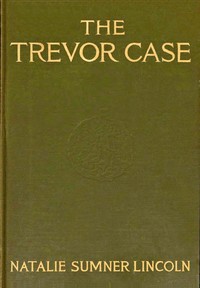
The Trevor case — A Reader’s Guide
(0 User reviews)
1020
Project Gutenberg
2022
Not confirmed
Detective and mystery stories; Murder -- Investigation -- Fiction; Washington (D.C.) -- Fiction
Readers of public-domain and historical texts
Project Gutenberg digital edition
en
Edition facts
Words
57,534
Reading time
251 min
Text sections
27
Before opening The Trevor case — A Reader’s Guide, the edition data offers a quick orientation: 57,534 words, 4 hr 11 min estimated reading time, and 27 detected text sections.
The text analysis averages about 13.1 words per sentence, while the detected sections provide another way to judge how the source is divided.
Project Gutenberg metadata also associates the work with “Detective and mystery stories,” connecting these edition facts with the source record’s subject description.
Source:
Project Gutenberg record #69004
Natalie Sumner Lincoln's 1919 mystery opens with a burglar cracking a safe, then shifts between Washington D.C. settings and tense personal confrontations, using structure and recurring imagery of locks, windows, and surveillance to build suspense.
Editorial Edition Score
4.8/5
★★★★★
★★★★★
Calculated from edition completeness, EPUB availability, text structure and catalogue metadata. Not a user rating.
How this score is calculated
- Description quality20 pts
- Title & short description10 pts
- Source metadata20 pts
- Text length15 pts
- Chapters / structure15 pts
- EPUB file integrity20 pts
Total of 100 points, scaled to a 2.5-5.0 range. Editions with an empty description or a missing EPUB file are not scored.
Edition quality
Read the Text
pent five years as a member of the Canadian Northwest mounted police, and that service had left its mark in his appearance.
“Good morning, Mr. Attorney General.” His bow included all in the room. “Sorry to disturb you, sir, but my errand won’t take long.”
“Be seated, Mr. ----”
“Hardy--James Hardy, sir. Just before dawn this morning, O’Grady, who patrols this beat, noticed a man sneak out of your back yard. O’Grady promptly gave chase and caught his man just as he was boarding a train for New York. He took him to the station and had him locked up on suspicion. As the fellow had a full kit of burglar’s tools with him, including mask and sneakers, the Chief sent me round here to ask if you’d been robbed?”
“Oh, no,” replied the Attorney General. “I have just been through my safe and everything is intact. There’s nothing missing in your quarters, Wilkins?” he added, turning to the white-faced butler.
“No, sir; nothing, sir.” Wilkins’ voice trembled, and he looked at the detective with frightened eyes.
“Perhaps he tried, and finding all the windows barred gave it up as a bad job. I am--” continued the Attorney General, but his speech was cut short by the entrance of Doctor Davis.
“I am told there is a detective here.” The Attorney General bowed and motioned to Hardy. “You are properly accredited?” went on the physician. Hardy threw back his coat and displayed his badge. “Have you told him of Mrs. Trevor’s death?”
“No. Why speak of that terrible accident--”
“It was no accident.” The physician’s voice, though low pitched, vibrated with feeling.
The Attorney General half rose from his chair; then sank back again.
“Davis,” he said, almost fiercely, “you _know_ that by some fearful mischance Hélène locked herself in the air-tight safe and was suffocated.”
The detective glanced with quickened interest at the two men.
“On closer examination upstairs,” said the doctor, slowly, “I found a small wound under the left breast. The wound was concealed by the lace bertha of her evening dress. The weapon penetrated to the heart, and she bled internally. Mrs. Trevor was dead before she was put in that safe.”
The detective broke the appalling silence with an exclamation:
Without one word Beatrice Trevor fell fainting at her father’s feet.
MANY called, but few were invited to attend Mrs. Van Zandt Macallister’s stately entertainments. Possibly for that reason alone her invitations were eagerly sought and highly prized by social aspirants.
For more years than she cared to remember, official, residential, and diplomatic Washington had gathered on an equal footing in her hospitable mansion on F Street. So strictly did she draw social distinctions that one disgruntled climber spoke of her evening receptions as “Resurrection Parties,” and the name clung. But all Washingtonians took a deep interest in “Madam” Macallister, as they affectionately called her. She was _grande dame_ to her fingertips.
On the occasion of her daughter’s marriage to the Duke of Middlesex she gave a beautiful wedding breakfast. The wedding was of international importance. The President, his Cabinet, and the Diplomatic Corps were among the guests.
Mrs. Macallister was standing in the drawing-room with her back to the dining-room door talking to the President. As the butler drew apart the folding doors, the long table, covered with massive silver, china, and glass, gave way under the weight. The crash was resounding. The terrified guests glanced at each other. Mrs. Macallister never even turned her head, but went on conversing placidly with the President.
The doors were instantly closed; the guests, taking their cue from their hostess, resumed their light chatter and laughter; and in a remarkably short time the table was cleared and reset, and the breakfast announced. As the President, with a look of deep admiration, offered his arm to Mrs. Macallister, he murmured in her ear:
“‘And mistress of herself though china fall.’”
Washington society had never forgotten the incident.
Mrs. Macallister had rather a caustic tongue, but a warm, generous heart beat under her somewhat frosty exterior. Her charities were never aired in public. Only the clergymen knew how many families she kept supplied with coal in winter and ice in summer. And many an erring sister had cause to bless her name.
Mrs. Macallister glanced impatiently at the clock--twenty minutes past five. She leaned forward and touched the electric bell beside the large open fireplace. There were two things she abominated--to be kept waiting--and midday dinners; the former upset her nerves; the latter her digestion.
“Has Miss Margaret returned?” she asked, as Hurley entered with the tea tray.
The novel begins not with a body but with a break-in: a hand thrust through a hole in a window pane, a burglar alarm disconnected, a safe cracked over three-quarters of an hour. This opening sequence establishes a pattern of physical intrusion and mechanical manipulation that recurs throughout the story. The intruder's muttered remark about the safe being old-fashioned signals that the plot will hinge on dated security and hidden knowledge.
Lincoln moves quickly from this nocturnal scene to daylight interiors—libraries, drawing rooms, and offices—where characters parry with words as precisely as the cracksman worked the lock. The contrast between silent, skillful action and heated dialogue creates a rhythm of tension and release.
Windows, Locks, and Listening Posts
The burglary in Chapter I is only the first instance of a sustained attention to thresholds and barriers. The intruder enters through a window, disconnects an alarm, and works a safe lock—all described with technical specificity: “Backwards and forwards the wards fell under the skillful fingers of the cracksman.” Later, characters repeatedly eavesdrop or observe through doorways and windows. Beatrice, for example, is seen from a doorway, and conversations are interrupted by arrivals who have been listening. The novel’s settings—a house with heavy curtains, a library with a closet hiding a safe, a telephone line (“Main 6”)—become nodes in a network of surveillance and concealment. Lincoln uses these physical details to map power and vulnerability: who can enter, who can hear, who controls the locks.
The Weight of Unspoken Knowledge
Dialogue in The Trevor Case often carries subtext that the reader must decode. When Beatrice tells Clark, “Your own conscience can answer better than I,” the accusation is oblique, and Clark’s response—“It tells me only of my love for you”—is equally evasive. The characters speak around the central crime, using emotional pressure as a weapon. Beatrice’s stepmother, Mrs. Trevor, is dead before the story begins, yet her influence pervades every conversation: Clark mentions her, Beatrice blames her for making home “unendurable,” and the inquest (Chapter IV) will presumably revisit her death. Lincoln withholds direct exposition, forcing the reader to infer motives from charged exchanges and loaded silences.
Movement Between Public and Private Spaces
The narrative shuttles between the Trevor house, the Macallisters’ home, and official settings like the inquest. Each location carries a distinct atmosphere: the Trevor library is a stage for tense confrontations; the Macallisters’ offers a social buffer; the inquest promises legal clarity. This movement mirrors the investigation’s progress from private suspicion to public inquiry. Lincoln also uses time markers—a telephone call from the White House, a reference to six o’clock—to anchor the story in a specific, contemporary Washington D.C. The city is not just a backdrop but a network of official and domestic spaces that characters navigate, often with conflicting agendas.
Eyes, Hands, and the Body as Evidence
Lincoln repeatedly draws attention to physical details: a hand thrust through glass, a face “white and drawn in the cold electric light,” a “well-knit, slender figure” drawn up to full height. These descriptions do more than characterize; they turn bodies into texts that can be read for guilt or innocence. Beatrice’s red eyes are interpreted by Clark as a sign of distress, but she denies it. The intruder’s perspiring face and mask suggest concealment. The signet ring (Chapter V) and the phrase “Hand and Pin” (Chapter XIV) hint that objects and body parts will become clues. The novel treats the physical as both surface and depth—what is seen may be a mask, what is hidden may be the truth.
Readers approaching The Trevor Case should attend to the interplay between what is said and what is done—the novel rewards attention to gestures, objects, and the arrangement of rooms. Lincoln’s Washington is a city of closed doors and open secrets, where a safe can be cracked and a reputation destroyed with equal precision. The story moves quickly, but its clues are embedded in the texture of everyday life: a telephone call, a dropped remark, a window left ajar.
That old feeling of being watched, of every window holding a threat, stayed with me long after The Trevor Case. It’s a quiet sort of unease, the kind that settles in your chest. I found that same lingering tension again recently in The Hospital Murders — Context and Discussion, only the rooms grew brighter, colder, and somehow more still.
There are no reviews for this eBook.
There are no comments for this eBook.
Reader reflection
How did this book work for you?
Your answers remain private and are stored only in this browser.
Your progress
0
/
10
2
Was reading this book enjoyable?
3
Would you encourage someone else to read it?
4
Did the language feel accessible?
5
Did any part of the book stay with you emotionally?
6
Could you follow the author’s main argument?
7
Did the book give you something worth debating?
8
Would a second reading be valuable?
9
What is the main idea you are taking away?
10