1

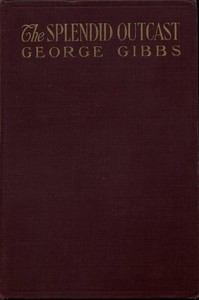
The Splendid Outcast — Inside the Classic
(0 User reviews)
1278
Project Gutenberg
2015
Not confirmed
Detective and mystery stories; Love stories; Paris (France) -- Fiction; Man-woman relationships -- Fiction; Brothers -- Fiction; Twins -- Fiction; Identity -- Fiction
Readers of public-domain and historical texts
Project Gutenberg digital edition
en
Edition facts
Words
103,825
Reading time
452 min
Text sections
14
The catalog record for The Splendid Outcast — Inside the Classic provides practical reading context through 103,825 words, 7 hr 32 min estimated reading time, and 14 detected text sections.
The text analysis averages about 13.5 words per sentence, while the detected sections provide another way to judge how the source is divided.
Project Gutenberg metadata also associates the work with “Detective and mystery stories,” connecting these edition facts with the source record’s subject description.
Source:
Project Gutenberg record #47900
George Gibbs's 1920 mystery follows Jim Horton, a wounded American soldier in Paris, and his bond with Piquette, a Latin Quarter gamine. The narrative shifts from hospital convalescence to a tense journey, marked by clipped dialogue and atmospheric detail.
Editorial Edition Score
4.8/5
★★★★★
★★★★★
Calculated from edition completeness, EPUB availability, text structure and catalogue metadata. Not a user rating.
How this score is calculated
- Description quality20 pts
- Title & short description10 pts
- Source metadata20 pts
- Text length15 pts
- Chapters / structure15 pts
- EPUB file integrity20 pts
Total of 100 points, scaled to a 2.5-5.0 range. Editions with an empty description or a missing EPUB file are not scored.
Edition quality
Read the Text
I. The Convalescent II. The Mystery Deepens III. The Goose IV. Outcast V. Piquette VI. Youth Triumphant VII. Awakening VIII. Threats IX. Piquette Takes a Hand X. The Samaritan XI. Confessions XII. Quinlevin Speaks XIII. Beginning a Journey XIV. A Night Attack XV. Green Eyes XVI. Nora Speaks XVII. Jim Makes a Guess XVIII. At Bay XIX. In the Dark XX. Freedom XXI. The Petit Bleu XXII. Mystery XXIII. Escape XXIV. The Clue XXV. The Conclusion
She crouched, watching, breathless and uncertain . . . _Frontispiece_
Through Moira’s clear intelligence the epic filtered
The mirror sent her back a haggard reflection, pale and somber
*THE SPLENDID OUTCAST*
Jim Horton awoke in high fever and great pain but the operation upon his skull had been successful and it was believed that he would recover. Something as to the facts of the exploit of the wounded man had come to the hospital and he was an object of especial solicitude by both surgeons and nurses. They had worked hard to save him that he might be alive for the decoration that was sure to come and the night had brought a distinct improvement in his condition. The nurse still watched his breathing eagerly and wrote down the new and favorable record upon the chart by his bedside. Miss Newberry was not in the least sentimental and the war had blunted her sensibilities, but there was no denying the fact that when the dressing was removed from his head the patient was extremely good to look at. He rewarded her on the morrow with a smile.
"How long have I been here?" he murmured hazily.
"Six days," she replied; "but you mustn’t talk."
"Sh—. In the head, shoulder and leg, but you’re doing nicely."
"Won’t you tell me——?" he began.
But she soothed him gently. "Not now—later perhaps. You must sleep again. Drink this—please."
Horton obeyed, for he found himself too weak to oppose her. It was very restful here; he wriggled his toes luxuriously against the soft sheets for a moment. If things would only stop whirling around.... And the pain ... but that seemed to cease again and he slept. Indeed his awakening was only to half-consciousness. Other days and nights followed when he lay in a sort of doze, aware of much suffering and a great confusion of thought. But slowly, as he grew stronger, the facts of his present position emerged from the dimness and with them a mild curiosity, scarcely lucid as yet, as to how he had gotten there. At last there came a morning when the fog upon his memory seemed to roll aside and he began to recall one by one the incidents that had preceded his unconsciousness.
There had been a fight. Some fight that was. Huns all over the place—in a ring around the rocks, up in the branches of the trees—everywhere. But he had held on until the Boches had started to run when the American line advanced. He remembered that the Engineers could do other things besides build saps and bridges. Good old Engineers! Something was wrong—somewhere.
Out of his clouded brain, slowly, the facts came to him—things that had happened before the fight—just before. Harry—his twin brother Harry, lying in the ditch just behind Jim’s squad of Engineers, a coward, in a blue funk—afraid to carry out his Major’s orders to go forward and investigate. A coward, of course! Harry would be. He had always been a coward.
Jim Horton sighed, his mind, ambling weakly into vacancy, suddenly arrested by a query.
_What else?_—What else had happened? Something to do with the remarkable likeness between himself and Harry? The likeness,—so strong that only their own mother had been able to tell them apart.
Memory came to him with a rush. He remembered now what had happened in the darkness, what he had done. Taken Harry’s lieutenant’s uniform, giving the coward his own corporal’s outfit. Then he, Jim Horton, had gone on and carried out the Major’s orders, leaving the coward writhing in the ditch.
By George!——the fight—he, Jim Horton, had won the victory at Boissière Wood for the —th Infantry—_for Harry!—as Harry_!
Perhaps, he was really Harry and not Jim Horton at all? He glanced around him curiously, as though somewhat amused at the metempyschosis. And then thoughtfully shook his head.
No. He was Jim Horton, all right—Jim Horton. There was no mistake about that.
The novel opens not with a crime but with a hospital bed. Jim Horton, a wounded American soldier, drifts in and out of consciousness as a nurse monitors his skull operation. Gibbs establishes a clinical, detached voice—'Miss Newberry was not in the least sentimental'—before pivoting into Horton's fragmented memories of battle. The prose mirrors his confusion: short, hazy sentences give way to sharper recollections of 'Huns all over the place.' This initial section, titled 'The Convalescent,' sets a rhythm of recovery and suspense that will define the narrative's pace.
A Voice of Two Speeds
Gibbs alternates between two distinct registers. In the hospital scenes, the narration is terse and observational: 'He wriggled his toes luxuriously against the soft sheets.' The language is almost clinical, focusing on physical sensation and medical routine. Once Horton leaves the ward, the prose loosens. When Piquette appears, sentences lengthen, and Gibbs adopts a more lyrical tone—'She was a new event in his experience, giving him a different meaning for many things.' This shift is not merely stylistic; it signals a change in Horton's internal state. The clipped, war-weary syntax of the opening gives way to the looser, more reflective voice of a man rediscovering human connection.
Piquette as a Counter-Rhythm
Piquette's dialogue and actions introduce a different tempo. She speaks in short, practical bursts—'Go an' 'urry back. I will wait for you'—and her gestures are swift and deflecting. When Horton takes her hand, she 'only let it rest there a moment and then gave a careless gesture.' Gibbs uses her to disrupt Horton's brooding. On the train to the Riviera, she 'greeted the passing landscape with little childish cries,' a contrast to Horton's 'gloom of his thoughts.' Her presence accelerates the narrative: the journey is described in a rush of place names—Juvisy, Arpajon, Etampes—while Horton watches her, detached yet magnetized. She is a force that keeps the story moving forward, even as Horton remains stuck in his past.
The Weight of the Unspoken
Gibbs builds tension through what is not said. Horton's memories of the war are fragmentary—'There had been a fight. Some fight that was'—and the narrative never fully recounts the battle. Similarly, Piquette's past is hinted at but never detailed: 'Whatever her past, her strange philosophy of life, her unique code of morals.' The gaps create a sense of withheld information. The chapter titles themselves—'The Mystery Deepens,' 'The Goose Outcast'—promise revelations that the excerpts only partially deliver. This restraint is deliberate; the pace of the novel depends on gradual disclosure, with each new scene adding a layer of ambiguity rather than resolution.
Readers should attend to the way Gibbs uses physical setting—the hospital ward, the train compartment—as a stage for psychological shifts. The narrative's rhythm is tied to Horton's recovery: when he is weak, the prose is fragmented; when he gains strength, the story expands. Piquette functions as both character and narrative device, her energy propelling the plot forward. The incomplete excerpts leave many questions unanswered, but the pattern of acceleration and pause is already clear.
There’s something about that wounded soldier and the quiet gamine that stayed with me—the way their bond grows in scraps of dialogue, unhurried and true. It made me think of The Master Mystery, which carries a similar weight of unspoken things between people. The Master Mystery — Key Ideas to Explore lingered like a half-remembered street in Paris, dim and warm.
There are no reviews for this eBook.
There are no comments for this eBook.
Reader reflection
How will you remember this book?
Save your reaction, strongest insight, and memorable passage.
Your progress
0
/
10
2
How did the book work for you overall?
3
How likely are you to recommend this book?
4
How demanding did the text feel?
5
Did the book offer a fresh perspective?
6
Did this book create an emotional response?
7
How closely did the book connect with your experience?
8
How valuable was this book for your own interests?
9
In one sentence, what did you learn?
10