1

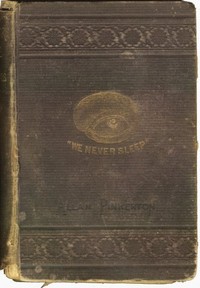
The Burglar's Fate, and The Detectives — Key Ideas to Explore
(0 User reviews)
275
Project Gutenberg
2006
Not confirmed
Detective and mystery stories; Detectives -- United States; Robbery -- United States -- Case studies
Readers of public-domain and historical texts
Project Gutenberg digital edition
en
Edition facts
Words
60,414
Reading time
263 min
Text sections
8
The catalog record for The Burglar's Fate, and The Detectives — Key Ideas to Explore provides practical reading context through 60,414 words, 4 hr 23 min estimated reading time, and 8 detected text sections.
The text analysis averages about 22.7 words per sentence, while the detected sections provide another way to judge how the source is divided.
Project Gutenberg metadata also associates the work with “Detective and mystery stories,” connecting these edition facts with the source record’s subject description.
Source:
Project Gutenberg record #17762
Allan Pinkerton's factual account of a bank burglary and the subsequent manhunt, detailing the detection process, the capture of three suspects, and the pursuit of a fourth fugitive across multiple states.
Editorial Edition Score
4.7/5
★★★★★
★★★★★
Calculated from edition completeness, EPUB availability, text structure and catalogue metadata. Not a user rating.
How this score is calculated
- Description quality20 pts
- Title & short description10 pts
- Source metadata20 pts
- Text length15 pts
- Chapters / structure15 pts
- EPUB file integrity20 pts
Total of 100 points, scaled to a 2.5-5.0 range. Editions with an empty description or a missing EPUB file are not scored.
Edition quality
Read the Text
CHAPTER I. Geneva--The Robbery--Search for the Burglars--My Agency notified 11
CHAPTER II. The Investigation begun--John Manning's Visit to Geneva--Eugene Pearson's Story--The Detective's Incredulity--A Miraculous Deliverance with a Ten-Cent Coin 22
CHAPTER III. An Interview with Miss Patton--Important Revelations--Doubts Strengthened--Mr. Bartman's Story--William Resolves to seek Newton Edwards 38
CHAPTER IV. The Work Progresses--Eugene Pearson's Early Life--On the Trail of Newton Edwards 51
CHAPTER V. New Developments--Tidings of Newton Edwards--Suspicions Strengthening against Eugene Pearson--Mr. Silby's Confidence 63
CHAPTER VI. The Detective at Woodford--An Interview with the Discarded Wife of Newton Edwards 77
CHAPTER VII. A Fire and a Talkative Fireman--Mrs. Edwards Receives a Letter 90
CHAPTER VIII. A Plan to Intercept Correspondence--Edwards fully Identified A pretty Servant Girl and a Visit to Church 102
CHAPTER IX. Waiting and Watching--Two Letters--Newton Edwards' Hiding-Place Discovered 116
CHAPTER X. The Burglar Tracked to his Lair--The old Stage Driver--A Fishing Party--A Long Wait--A Sorrowful Surprise--The Arrest of Newton Edwards 125
CHAPTER XI. Newton Edwards brought back to Chicago--Attempt to Induce a Confession--a Visit to his Relatives--The Burglar Broken Down 141
CHAPTER XII. The Confession of Newton Edwards--The foul Plot fully Explained Eugene Pearson's Guilt clearly Proven--A Story of Temptation and Crime 154
CHAPTER XIII. Edwards taken to Geneva--The Arrest of Eugene Pearson His Confession--More Money Recovered--Dr. Johnson Arrested 167
CHAPTER XIV. Proceedings at Geneva--Speculations as to the Missing Five Thousand Dollars--John Manning Starts in Search of Thomas Duncan 182
CHAPTER XV. On the Track of the fleeing Burglar--Duncan's Home--Some Reflections 192
CHAPTER XVI. Bob King meets with a Surprise--His Story of Duncan's Flight The Detective starts Westward 208
CHAPTER XVII. Manning Strikes the Trail--An Accommodating Tailor--Temporary Disappointment and final Success--The Detective reaches Minneapolis 224
CHAPTER XVIII. The Detective at Bismarck--Further Traces of the Fugitive A Protracted Orgie--A Jewish Friend of the Burglar in Trouble 241
CHAPTER XIX. From Bismarck to Bozeman--The trail Growing Warmer--Duncan Buys a Pony--A long Stage Ride 254
CHAPTER XX. The Stage Driver's Story 266
CHAPTER XXI. False Information which nearly Proves Fatal--A Night Ride to Helena--Dangers by the Wayside 280
CHAPTER XXII. In Helena--A Fruitless Quest--Jerry Taylor's Bagnio--Reliable Tidings--A Midnight Ride--Arrival at Butte City 293
CHAPTER XXIII. The Long Trail Ended--Duncan Traced to his Lair--Caught at last The Escaping Burglar a prisoner 306
CHAPTER XXIV. The Burglar Returns to Chicago--Revelations by the Way The Missing Five Thousand Dollars 319
CHAPTER XXV. The Mystery of the Missing Five Thousand Dollars Solved at Last The Money Recovered--Duncan at Geneva 328
CHAPTER XXVI. Conclusion--Retribution 337
THE BURGLAR'S FATE AND THE DETECTIVES.
Geneva--The Robbery--Search for the Burglars--My Agency Notified.
Geneva is one of the prettiest and most thriving little towns in the west. Situated, as it is, in the midst of one of the finest agricultural districts in the country, its growth has been rapid beyond expectation, while its social progress has been almost phenomenal. Stretching for miles in all directions, over a country beautifully interspersed with gentle elevations and depressions, lie the well-cultivated farms of the honest tillers of the soil. The farm-houses, which nestle down beneath the tall trees, present an appearance of comfort and beauty rarely witnessed, while the commodious and substantial out-buildings evince the thorough neatness of systematic husbandry. Standing upon a high knoll, and gazing over the scene upon a bright sunny morning, the eye lights upon a panorama of rustic splendor that delights the vision and entrances the senses. The vast fields, with their varied crops, give indications of a sure financial return which the gathered harvests unfailingly justify, and the rural population of Geneva are, in the main, a community of honest, independent people, who have cheerfully toiled for the honest competence they so fully enjoy.
Nor is the town dependent alone upon the farmer and the herdsman for its success in a financial sense. Nature has been bounteous in her gifts to this locality, and in addition to the fertile and fruitful soil, there is found imbedded under the surface, great mines of coal, of excellent quality, and seemingly inexhaustible in quantity. This enterprise alone affords employment to hundreds of men and boys, who, with their begrimed faces and brawny arms, toil day and night in the bowels of the earth for the "black diamonds," which impart warmth and light to countless happy homes, and materially add to the wealth of the miners.
Numerous manufacturing industries also find a home here. Large buildings, out of whose huge chimneys the black smoke is pouring forth in dense volumes, and whose busy wheels and roaring furnace fires, mingled with the sound of scores of ringing hammers, make merry music throughout the day.
Allan Pinkerton opens this volume with a preface insisting that what follows is 'a story of actual occurrence' and that 'no touch of fiction obscures the truthful recital.' The crime—a bank burglary in Geneva—is presented as a case study in the inevitable consequences of criminal action. Pinkerton names the four perpetrators (Eugene Pearson, Dr. Johnson, Newton Edwards, and Thomas Duncan) while claiming to cloak their real identities under 'the charitable mantle of fiction.' This tension between factual reporting and narrative concealment runs throughout the work.
The excerpts show Pinkerton's method: he describes the arrest of three men within thirty days, then details the logistical and financial difficulties of pursuing the fourth fugitive. The narrative shifts between the detective agency's strategic decisions and the movements of operatives like John Manning, who traces Duncan through saloon conversations and trunk shipments. Pinkerton's voice is that of a manager reporting to bank officials, weighing costs and probabilities.
The Detective as Administrator
Pinkerton presents detection not as a series of dramatic revelations but as a bureaucratic process. He informs the bank officers of 'the expense and delay that would be contingent upon such an undertaking' and leaves the decision to continue the search to them. The language is that of a business report: 'these facts were fully explained,' 'the matter was left to their decision.' When the bank authorizes further pursuit, Pinkerton dispatches operative John Manning to Clinton, Iowa, 'with full authority to exercise his own judgment.' The detective agency functions as a corporate entity, managing resources and personnel across state lines.
This administrative framing extends to the tracking of physical evidence. Two operatives watch Thomas Duncan's trunks in Chicago, noting when they are loaded onto an express wagon and shipped to Des Moines. The detail is mundane—waiting 'for more than two hours,' following the wagon to the railroad station—but it grounds the investigation in observable, verifiable actions. Pinkerton's authority derives not from intuition but from systematic record-keeping and delegation.
Voice and the Limits of Testimony
The excerpts contain multiple layers of reported speech. Pinkerton writes in the first person, but his narrative often relays what others have told him. In Chapter XV, operative John Manning converses with a saloon keeper who asks, 'Do you know Tod?' The dialogue is rendered indirectly: 'Oh yes, very well,' replied Manning. The saloon keeper remembers that Duncan 'looked very much broken up' after a Chicago spree. This chain of hearsay—Pinkerton reporting Manning reporting the saloon keeper—creates a sense of distance from the events themselves.
Pinkerton's own voice is measured and cautious. He admits that 'more than thirty days had elapsed' since the robbery and that the fugitive might be alerted by news of the arrests. He does not promise success, only that he will 'achieve success if it were possible to do so.' The narrative is punctuated by such qualifications, reminding the reader that detection is uncertain and that the account is retrospective, shaped by outcomes already known.
Geography and the Fugitive's Trail
The pursuit of Thomas Duncan traces a specific geography: from Geneva to Chicago, then to Clinton, Iowa, and onward to Des Moines and Ames. Pinkerton notes that Edwards and Duncan 'parted company at Clinton,' with Duncan heading west and Edwards eastward to New York. The landscape is mapped through railroad lines and express routes. Manning arrives at Clinton 'near nightfall,' eats a meal, and begins inquiries at a saloon 'which they frequented.' The investigation moves through commercial spaces—hotels, saloons, railroad stations—where travelers leave traces.
Pinkerton emphasizes the fugitive's mobility and the detective's need to anticipate it. Duncan's intended fishing trip to Denver is mentioned as a possibility, not a certainty. The narrative conveys the difficulty of fixing a 'limit to the time that would be necessary to effect his capture.' The geography is not merely backdrop but an active element: the fugitive's flight and the detective's pursuit are structured by the transportation network of the 1880s.
Readers should approach this work as a hybrid document: part crime report, part institutional memoir, part moral lesson. Pinkerton's preface frames the story as a deterrent for 'young men of to-day,' but the excerpts reveal a more pragmatic interest in procedure and evidence. The tension between the author's stated didactic purpose and his detailed account of investigative logistics gives the narrative its particular texture. Pay attention to how Pinkerton balances the roles of moralist, manager, and narrator, and consider what the gaps in the record—the missing fugitive, the concealed real names—suggest about the limits of his truth-telling.
The rain drummed against the windows while I followed Allan Pinkerton's patient trail, the methodical pursuit of that fourth fugitive. It made me think of how a story's shape depends on its teller. Later, browsing the shelf, I stumbled upon The Adventures of the Eleven Cuff-Buttons Being one of the exciting episodes in the career of the famous detective Hemlock Holmes, as recorded by his friend Dr. Watson — Themes and Context, and found a different kind of chase, one driven by charming deduction. The rain kept falling, and I simply turned the page.
There are no reviews for this eBook.
There are no comments for this eBook.
Reader reflection
How did this book work for you?
Your answers remain private and are stored only in this browser.
Your progress
0
/
10
2
How much did you enjoy the reading experience?
3
Is this a title you would suggest to others?
4
What was the reading difficulty like?
5
Would a second reading be valuable?
6
How well did it match your expectations?
7
Did anything about the book feel genuinely new?
8
Which part made the strongest impression?
9
What is the main idea you are taking away?
10