1

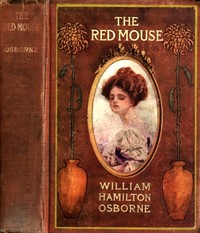
The Red Mouse: A Mystery Romance — Inside the Classic
(0 User reviews)
1652
Project Gutenberg
2011
Not confirmed
Fiction; Detective and mystery stories
Readers of public-domain and historical texts
Project Gutenberg digital edition
en
Edition facts
Words
72,341
Reading time
315 min
Text sections
7
The source record for The Red Mouse: A Mystery Romance — Inside the Classic measures this digital text at 72,341 words, 5 hr 15 min estimated reading time, and 7 detected text sections.
The text analysis averages about 14.6 words per sentence, while the detected sections provide another way to judge how the source is divided.
Project Gutenberg metadata also associates the work with “Fiction,” connecting these edition facts with the source record’s subject description.
Source:
Project Gutenberg record #36247
A mystery romance centered on Miriam Challoner, whose husband's reckless behavior and a bribery scandal involving lawyer Murgatroyd expose tensions between wealth, reputation, and justice in New York society.
Editorial Edition Score
4.7/5
★★★★★
★★★★★
Calculated from edition completeness, EPUB availability, text structure and catalogue metadata. Not a user rating.
How this score is calculated
- Description quality20 pts
- Title & short description10 pts
- Source metadata20 pts
- Text length15 pts
- Chapters / structure15 pts
- EPUB file integrity20 pts
Total of 100 points, scaled to a 2.5-5.0 range. Editions with an empty description or a missing EPUB file are not scored.
Edition quality
Read the Text
Nor were comments of that kind the worst that she might expect! For, as a penalty for belonging to a set which, to a greater degree, perhaps, than any other, recognises the possibility of an up-to-date couple having a mutually implied understanding that neither shall object to the discreet--and more or less temporary--faithlessness of the other--she knew that it would be well-nigh miraculous if some kindly disposed persons did not go still further for an explanation of his conduct, and point to her and her husband as a conspicuous example of such a precious pair. But though her whole being rebelled at the mere thought that there could be people who would regard her in such a light, she could not bring herself to take decisive action of any kind. There was nothing that could be said, she told herself, nothing that could be done--since a most conscientious and pitiless self-analysis had failed to reveal any wifely shortcoming--except to have faith that there were some of her sex--not many, it is true, but still a few friends--who would continue to believe her incapable of doing any of the things that so many others did, for whom there was far less excuse than there would be for her.
But whatever were the opinions of the women, there was no disposition on the part of the men to hold her in any way responsible for his behaviour. Far from it. And in a favourite corner of an exclusive club, when the names of fair ladies--mostly of the stage--were bandied about as figuring in young Challoner's escapades, old cronies of his father, between sips of their Scotch and sodas, were wont to boil over with contemptuous indignation and explosively give thanks to the gods for willing that their lovable, old-time friend should not live to see the confirmation of his fears. And how well they recalled those fears!
For notwithstanding his very moderate circumstances, the elder Challoner had been that rarest of mortals--a man blissfully content with his lot in life, and, one who seldom missed an opportunity to deplore the insatiable craze of the rich for more riches, forever protesting that blatant commercialism, haste and artificiality were the gods of the present day; and no picture in their gallery of lasting impressions stood out more vividly than the one in which, surrounded by a group of young fellows, who had "got him going," as they phrased it, he was declaiming against--what was merely his pet hobby in another form--the egregious folly of poor young men seeking riches through marriage.
"... and I, young gentlemen," he would conclude with great earnestness, "will always maintain that such a union will make a man lose all incentive to work out what the good Lord has put in him."
Little wonder, then, that on the announcement that a marriage had been "arranged" between Challoner's son and a daughter of a man whose name the world over was significant of fiscal potency, the day bid fair to be a memorable one at the club, his contemporaries preparing to make merry at the old fellow's expense. But in a sense his "showing up" there had been a disappointment; one look at the face, which showed symptoms of distress and a desire to be reassured, was sufficient to cause the banter to die in their hearts before it had reached their lips.
It soon came out that there had been a scene between father and son. These two, for many years, had been the only members of the family; and probably better than any one in the world the father had known the son's weaknesses: hypersensitive to new influences, vanity and inability to say no; and he had pointed out to him the many disadvantages--dangers to one of his temperament--which he could see in such an alliance. To the father's thinking, the boy would have no home--only establishments, yachts, racing-stables and motor-cars; and he had contended that there were far more desirable things in life than the possession of these--from which it can easily be surmised that J. Lawrence Challoner, senior, was a man little in sympathy with the ideas of modern fashionable society.
The novel opens with Miriam Challoner struggling to convince herself that her husband is no worse than other rich young men, but public opinion has already labeled him "that mad Challoner." The narrative voice is notably direct, using phrases like "going to the dogs, in truth, as fast as her money could take him there" to establish a tone of social critique. The excerpts reveal a story driven by scandal, legal maneuvering, and personal relationships, with the bribery attempt of Murgatroyd—a lawyer who refuses twenty thousand dollars—becoming a central incident. The catalog subjects list only "Fiction; Detective and mystery stories," but the text shows a stronger emphasis on marital disillusionment and societal judgment than on puzzle-solving detection.
Marriage and Social Standing
The opening chapters focus on Miriam Challoner's internal conflict. She reflects that she has "fallen grievously in her own estimation" and imagines the gossip of society women who would blame her for her husband's behavior. The narrator describes her as lacking a "highly imaginative temperament," yet she vividly anticipates "expressive shrugs" and whispered accusations. This psychological detail suggests that the mystery element is secondary to the exploration of a woman trapped by her husband's reputation. The catalog subject "Detective and mystery stories" does not capture this sustained attention to marital dynamics and social performance.
The Bribery Incident and Its Aftermath
Miriam's attempt to bribe Murgatroyd with twenty thousand dollars is met with refusal, and the subsequent newspaper coverage turns into a public relations victory for the lawyer. The text notes that "the fiasco had helped Murgatroyd infinitely more than it had hurt him," and the public laughs at the story. This sequence reads more like a legal thriller than a traditional whodunit, with the mystery revolving around character and motive rather than clues. The excerpts do not reveal whether a crime has occurred; instead, they present a web of accusations and denials. The catalog's "Detective and mystery stories" label may mislead readers expecting a conventional detective plot.
Shirley Bloodgood's Intervention
Shirley Bloodgood summons Murgatroyd to her home, addressing him as "Billy" and demanding to know why he took the money. Her emotional outburst—"Why did you take this money? Why?"—suggests a prior intimacy and a personal stake in his actions. Murgatroyd, described as a "clever lawyer," is anxious about her "catechising" and resolves to "bide his time." This scene introduces a romantic or emotional subplot that complicates the legal drama. The excerpts do not clarify Shirley's relationship to the case or her motives, but her presence shifts the narrative toward personal loyalty and betrayal, elements not indicated by the catalog subjects.
Readers should approach The Red Mouse expecting a story that intertwines marital strife, legal ethics, and romantic tension rather than a straightforward mystery. The excerpts provide no evidence of a detective figure or a puzzle to be solved; instead, the intrigue arises from characters' secrets and social pressures. Pay attention to how the narrator judges each character's actions and how the dialogue reveals hidden alliances.
I finished that old mystery, The Red Mouse, and something about Miriam’s quiet dread—how money can silently buy a person’s reputation—stayed with me for days. It reminded me, oddly, of a quieter read about another suitcase’s secrets. That same weight, heavy and unspoken, lingers there too. The Million-Dollar Suitcase — Key Ideas to Explore feels like sitting with that thought a little longer, without needing to say much.
There are no reviews for this eBook.
There are no comments for this eBook.
Reader reflection
How did this book work for you?
Your answers remain private and are stored only in this browser.
Your progress
0
/
10
2
What was your overall reaction to the book?
3
Is this a title you would suggest to others?
4
How much effort did this book require?
5
How clearly were the main ideas presented?
6
Did the book give you something worth debating?
7
How well did it match your expectations?
8
How valuable was this book for your own interests?
9
Which lesson or insight stayed with you?
10