1

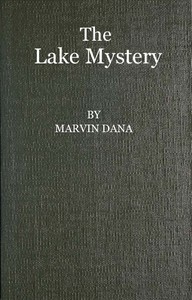
The Lake Mystery — Story, Setting & Ideas
(0 User reviews)
698
Project Gutenberg
2019
Not confirmed
Detective and mystery stories; American fiction -- 20th century
Readers of public-domain and historical texts
Project Gutenberg digital edition
en
Edition facts
Words
72,916
Reading time
318 min
Text sections
29
For The Lake Mystery — Story, Setting & Ideas, the stored edition analysis reports 72,916 words, 5 hr 18 min estimated reading time, and 29 detected text sections.
The text analysis averages about 17.7 words per sentence, while the detected sections provide another way to judge how the source is divided.
Project Gutenberg metadata also associates the work with “Detective and mystery stories,” connecting these edition facts with the source record’s subject description.
Source:
Project Gutenberg record #59790
Marvin Dana's 1923 mystery follows four friends deciphering a miser's musical cipher to find gold hidden in a lake, with a villainous engineer plotting murder. The excerpts reveal a puzzle-driven plot, a sixth-sense subplot, and a love interest complicating the treasure hunt.
Editorial Edition Score
4.8/5
★★★★★
★★★★★
Calculated from edition completeness, EPUB availability, text structure and catalogue metadata. Not a user rating.
How this score is calculated
- Description quality20 pts
- Title & short description10 pts
- Source metadata20 pts
- Text length15 pts
- Chapters / structure15 pts
- EPUB file integrity20 pts
Total of 100 points, scaled to a 2.5-5.0 range. Editions with an empty description or a missing EPUB file are not scored.
Edition quality
Read the Text
he built the ordered sequence of his improvisations:
The player ended with a harsh clangor from the keys, and whirled about on the stool to stare intently toward the wall opposite the fireplace. Now, his pallid face in the glimpse that showed above the beard, was faintly flushed from the bodily strain of playing. But the fire burning in the dark eyes proved that the emotion within still maintained its vigor undiminished. Springing up, he drew his tall, thin form to its full height, and stood thus motionless for a long minute, gazing fixedly at the wall before him. Then, again with the swift movement of the head by which the white curls were thrown back from his brow, he strode forward, and came to a stand facing the naked wainscoting of the wall.
In the long, barren room, devoid of other ornament, this paneling was of itself sufficient to command attention. Beyond a few scattered chairs, a solitary table with its lamp, the irons of the fireplace, a cabinet for music, the piano and the high lamp standing beside it, there was nothing in the place, not even so much as draperies to mask the ugliness of the window-shades. Such scarcity of furnishing was emphasized by the size of the apartment, which was fifty feet in length and half as wide. Doubtless, the occupant had preferred the space thus free from aught that might in any wise hamper the resonance of the music. Be that as it may, the ornateness of the wainscoting was made conspicuous, since only the piano offered another interest. Of black walnut, it ran to a height of at least seven feet out of the ten that measured the wall, and, extending around the four sides of the room, gave to the aspect of the place a quality of melancholy so extreme as to be almost funereal--an effect in no way lessened on closer observation, since the deep carving was merely a conventional labyrinth of scrolls.
The manner in which Abernethey scanned the wall opposite him was too intent to be explained by any ordinary concern with woodwork long familiar. Moreover, his eyes were glowing fiercely; the talonlike fingers writhed curiously where they hung at his sides; the shaggy white brows were drawn low; from time to time, the tip of the thin nose was thrust downward in the movement peculiar to him. It was plain that he was in the grip of profound feeling, though he stood mute before a stark space of wall.
The old man bestirred himself abruptly. His right arm was raised with swift grace; the dexterous fingers played for a moment silently, yet firmly, on the crowded traceries of the carving. A flurry of wind brought the rain clattering noisily against the window-panes, but the musician gave no heed; the clock rang softly from a single stroke of the gong, but his ears had no care for the hour. He was muttering to himself now, brokenly, despairingly, the while his fingers wandered over the intricate design of the paneling:
“Mine--mine ... and I must leave it all--must leave it all--soon! Oh, so soon! God! The torture of it ... mine--all mine! Ah!”
Without warning sound the panel on which his hand rested had swung outward, until it stood like a door, wide-open. An ejaculation of eagerness burst from Abernethey’s lips, as he peered within the opening thus revealed through the wall. A large plate of polished steel glimmered in the dim light that came from the lamp beside the piano. A figured knob in the center of this plate proclaimed the fact that here was a cunningly contrived safety-vault.
The old man’s arm again reached forth with that astonishing quickness which characterized his every movement. Now, the agile fingers seized the knob of the safe door, twirling it with practised certainty of touch. Presently, the methodical adjustment complete, he tugged briskly on the knob, and the door swung outward. An exclamation of delight burst from Abernethey’s lips; his form grew suddenly tense. With febrile haste, he put both hands to the lighter inner doors, and pulled them open. A small electric torch lay ready to hand just within, on which he seized. Immediately, its soft radiance revealed the whole interior of the recess.
The Lake Mystery opens with a miser, Horace Abernethey, cursing the weather and preparing to visit a hiding place. The prologue establishes a cipher based on musical notation—using Largo for L and lac for K—to encode the phrase “The Bed of the Lake.” This puzzle-driven premise, rather than a crime, sets the plot in motion.
Cataloged as a mystery collection, the text is a single novel with 26 chapters plus a prologue. The excerpts focus on deciphering clues, not on detection or law enforcement. The narrative voice is omniscient and occasionally florid, describing characters with phrases like “the white cascade of beard” and “the laboriousness of senility.”
The Miser's Cipher and Musical Code
The central puzzle in the excerpts is a cipher that uses musical notation to spell words. The miser, lacking the letter K in musical notation, substitutes the French lac for “lake.” This detail is explicitly explained by a character who deciphers the phrase “Bedlac” as “The Bed of the Lake.” The cipher is not a simple substitution but a creative workaround, reflecting the author’s interest in code-making.
The excerpts show the characters studying “the scrawled notes” and spending “hours in study of the scrawled notes in the quest of added discovery.” The puzzle is presented as solvable through reason, with one character confident in “the orderly processes of reason.” However, the excerpts do not reveal whether the cipher is fully cracked or leads directly to the gold.
The Search Party and Their Methods
The four friends—Billy, Roy, David, and Saxe—approach the treasure hunt with different methods. Billy relies on reason, Roy on a “sixth sense,” and David on “optimistic trust in the occult.” Saxe is distracted by a love affair with Margaret West. The group spends time on the water in a motor-boat, with a boatman named Jake piloting due to “abundant sunken rocks and shoals.”
The excerpts show a collaborative effort: “No secret was made of the information thus obtained as the first progress in the search for the gold.” The villain, Masters, is an engineer who plots against Saxe, hoping to remove a rival and gain a chance at the treasure. The narrative shifts between the group’s activities and Masters’s schemes, but the excerpts do not reveal whether his plans succeed.
Setting and Atmospheric Details
The story is set around a lake, with the miser’s house featuring a “concert-grand piano” and a “Dresden clock.” The prologue describes rain spattering on window panes and a fire of logs. The lake itself is hazardous, with “sunken rocks and shoals” requiring a skilled pilot. The treasure is hidden “under the water of the lake.”
The excerpts include a chapter titled “The Episode of the Launch,” suggesting a significant event on the water. The atmosphere is tense, with characters feeling “an air of excitement” and later “humiliating defeat.” The villain’s perspective is given, describing him as “the indefatigable scoundrel” who “set himself with cold-blooded ingenuity.” The setting is integral to the plot, but the excerpts do not describe the lake’s geography in detail.
Readers should note that the excerpts cover only the early and middle chapters, up to Chapter XIV. The full novel likely involves further twists, including the resolution of the cipher, the fate of the treasure, and the outcome of the romantic subplot. The presence of a sixth sense as a plot device suggests a blend of rational deduction and supernatural elements. Pay attention to how the author balances these two approaches.
Rereading The Lake Mystery, I found myself lingering on that detective’s quiet method of listening, not just to clues but to the space between them. It felt familiar, that patience. Somehow, it stirred my memory of another old story, where a similar stillness held the plot together. I thought of The Blue Lights: A Detective Story — Inside the Classic, and how both books share that gentle, careful way of seeing through the murk.
There are no reviews for this eBook.
There are no comments for this eBook.
Reader reflection
Your personal reading reflection
Build a private reading journal entry for this title.
Your progress
0
/
10
2
What was your overall reaction to the book?
3
Would you encourage someone else to read it?
4
How demanding did the text feel?
5
How closely did the book connect with your experience?
6
How valuable was this book for your own interests?
7
Which part made the strongest impression?
8
What was its emotional impact?
9
In one sentence, what did you learn?
10