1

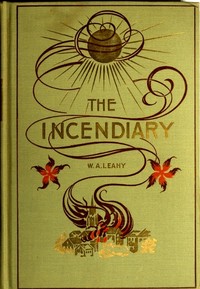
The Incendiary: A Story of Mystery — A Closer Reading
(0 User reviews)
1750
Project Gutenberg
2012
Not confirmed
Detective and mystery stories; Inheritance and succession -- Fiction; Arson -- Fiction
Readers of public-domain and historical texts
Project Gutenberg digital edition
en
Edition facts
Words
130,885
Reading time
570 min
Text sections
13
The catalog record for The Incendiary: A Story of Mystery — A Closer Reading provides practical reading context through 130,885 words, 9 hr 30 min estimated reading time, and 13 detected text sections.
The text analysis averages about 13.7 words per sentence, while the detected sections provide another way to judge how the source is divided.
Project Gutenberg metadata also associates the work with “Detective and mystery stories,” connecting these edition facts with the source record’s subject description.
Source:
Project Gutenberg record #39544
Leahy's 1897 mystery follows lawyer Shagarach, who uses psychological methods to defend Robert Floyd against arson charges. Excerpts reveal tensions between logical and physiological criminology, a tapping window, and a black-edged letter, with the dog Sire and a crowd's panic at the fire.
Editorial Edition Score
4.8/5
★★★★★
★★★★★
Calculated from edition completeness, EPUB availability, text structure and catalogue metadata. Not a user rating.
How this score is calculated
- Description quality20 pts
- Title & short description10 pts
- Source metadata20 pts
- Text length15 pts
- Chapters / structure15 pts
- EPUB file integrity20 pts
Total of 100 points, scaled to a 2.5-5.0 range. Editions with an empty description or a missing EPUB file are not scored.
Edition quality
Read the Text
FANFARE: THE PLAY BEGINS.
It was about half-past three in the afternoon when Bertha, the housemaid, came running down the steps, with a shrill cry of "Fire!" and fell plump into the arms of the bake-shop girl, who had seen the smoke curling from Prof. Arnold's window and was hastening across to warn the occupants of his house. The deep bark of a dog was heard within and presently Sire, the professor's old St. Bernard, rushed by the two young women and darted hither and thither, accosting the bystanders distractedly, as if burdened with a message he could not communicate.
"Ring the alarm!" cried Bertha and the bake-shop girl in a breath, as soon as they had recovered from the shock of their collision. Their cry was taken up by a knot of three boys, who, as usual, were the first on the spot; passed along till it reached some loungers on the corner, whose inertia was more gradually overcome; and presently half the neighborhood, as if by a spontaneous impulse, came thronging into Cazenove street, each following his leader, like a flock of startled ewes. Bertha, caught in the middle of this ring of sight-seers, stood paralyzed a moment; then singling out the one man of action, she broke through the crowd and stopped him midway in his advance.
"For the love of heaven, will you ring the alarm?"
The postman turned and scudded to the box. There was an interval of suspense that seemed an age.
"Is there any one in the house?" was the first question of Patrolman Chandler, when he galloped up to the scene. He had been attracted at once by the barking of Sire.
"Mr. Robert," cried Bertha, wringing her hands. "Mr. Robert was in the study." The crowd looked up and measured the swift gains of the destructive element.
"Young Floyd?" said Chandler. Then he rushed into the house and up the first flight of winding stairs, the dog, as he did so, following him with a great fusillade of delighted barks.
"There's some one inside," said the crowd, and the rumor passed from mouth to mouth.
"Fire! Fire!" called Chandler from the corridor window above. "Yell, you fellows, as you never yelled before!"
In response a cry of "Fire!" went up from man, woman and child, bass and treble intermingling, loud enough to have waked the seven sleepers from their trance. But no one stirred inside. Just at this moment the tardy bells rang out the number of the box, and almost immediately, as an engine came rounding a distant corner and the great gray horses bounded up the grade, the uproar began to subside. On, on, past the doomed house, now enveloped in flames, to the nearest hydrant, the driver lashed his pair. The hydrant cover had been thrown off and the first block of coal flung into the engine's furnace before Patrolman Chandler reissued from the door which he had entered.
"There is no one there," he gasped, as if choking with the smoke. But the dog continued to leap about, accosting the bystanders appealingly, until his barks and pawing became a nuisance to several and they spurned him pettishly away.
Now engines from many directions came clattering by and the air was full of clangor. Lines of hose were unraveled, ladders hoisted against the walls, and finally, amid hoarse shouts that pierced the deep sighing of the flames within, a rubber-clad, helmeted fellow, with a nozzle strapped to his body, slowly led a line up to the second-story window, where the fire had apparently started. There was another interval of suspense, orders to and fro, and then a helpless pause. Something refused to work.
But the fire met no such impediment. Suddenly an explosion of uncertain origin shook the air, and the onlookers retreated in terror, as if the ground were yawning beneath them. Of a sudden one, two, three slack, snaky hose lines rounded out, and a burst of foam, battering in window-panes and sashes, inaugurated the great combat of elements--one angry, vindictive, as if ravening to sunder the bonds of control cast about it by the pigmy, its master, the other docile and benignant, but in the end the more puissant of the two.
The opening fire in Cazenove street is not a simple alarm. Leahy orchestrates a chain reaction: Bertha the housemaid collides with the bake-shop girl, a dog named Sire barks distractedly, and three boys pass the cry to loungers on the corner. The crowd moves “like a flock of startled ewes.” The postman is singled out as “the one man of action.” Patrolman Chandler, attracted by the dog’s barking, rushes in to rescue “Mr. Robert”—Robert Floyd, the accused. The scene establishes a pattern of indirect communication and collective response that recurs throughout the excerpts.
The Lawyer’s Competing Methods
Shagarach, the defense lawyer, explicitly contrasts two schools of criminology. He criticizes the “logical method only” of his associate McCausland, who “ignores the psychological.” He also dismisses the “strictly physiological” approach that “predict too much from a man’s physical peculiarities.” Instead, Shagarach claims to have become sure of Robert Floyd’s innocence not through evidence but by seeing him “through the cell-bars of the jail.” He judges character by capacity for crime, not by facts alone.
His working library contains “treatises on psychology, the old and the new,” and he shows Emily an Italian criminology text with “villainous heads in profile and full face.” Yet he rejects the very method those books represent. This tension—between psychological intuition and physical typology—is central to his investigation. The excerpts do not reveal which approach solves the case, but the conflict is explicit.
Threats in the Dark: Letters and Tapping
Shagarach receives a “black-edged letter” warning that he is “marked and doomed.” His mother seizes his arm in alarm. Immediately after, a “strange tapping” comes from the window—first heard earlier, now repeated. Emily shudders; the mother blanches. Shagarach investigates but finds no one. The tapping is attributed to a mouse, then to a stranger, but remains unexplained.
The letter and the tapping are linked in the characters’ minds to the Floyd case. Shagarach tells Emily that “the parties opposed to us in the Floyd case should resort to murder. It is a confession of guilt.” The threat is external, but the source is ambiguous. The excerpts offer no resolution, only the persistent atmosphere of unseen menace.
Shifting Suspicions: Harry Arnold and the Glove
Emily’s view of Harry Arnold changes during the excerpt. She learns that McCausland is investigating Arnold but refuses to find him suspicious. Shagarach, however, has not shared all his evidence. Emily recalls “the finding of the glove and the testimony of the three gamins” and begins to “come around to Shagarach’s view of Harry Arnold’s possible guilt.” The attack on Robert’s lawyer further convinces her.
The evidence is incomplete: the glove, the gamins’ testimony, and the letters are mentioned but not described. The reader, like Emily, must weigh partial information. Shagarach’s confidence in Robert’s innocence contrasts with his willingness to suspect Arnold, creating a layered puzzle where even the investigator’s allies may be guilty.
The excerpts present a mystery built on competing methods of detection, unexplained threats, and shifting suspicions. Leahy’s narrative relies on indirect communication—crowds, letters, tapping—rather than direct revelation. Readers should attend to the psychological clues Shagarach values, but also to the physical details he dismisses. The dog Sire, the glove, and the black-edged letter may all prove significant, but the excerpts leave their meanings unresolved.
There’s something about Shagarach’s quiet watching—how he reads a room the way the lawyer in that old fire case reads a crowd—that stays with me long after the last page. It reminds me of another house I wandered through once, where every creak felt deliberate. The Red House on Rowan Street — Text and Context carries that same hush, the same sense that walls remember what we forget.
There are no reviews for this eBook.
There are no comments for this eBook.
Reader reflection
Your personal reading reflection
Build a private reading journal entry for this title.
Your progress
0
/
10
2
How much did you enjoy the reading experience?
3
How likely are you to recommend this book?
4
How easy was the book to follow?
5
What did you think about the pace?
6
Did you relate to its people, ideas, or situations?
7
How original did the book feel?
8
Did this book create an emotional response?
9
What changed or sharpened your thinking?
10