1

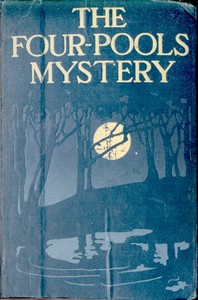
The Four-Pools Mystery — Story, Setting & Ideas
(0 User reviews)
28
Project Gutenberg
2007
Not confirmed
Detective and mystery stories
Readers of public-domain and historical texts
Project Gutenberg digital edition
en
Edition facts
Words
62,339
Reading time
272 min
Text sections
6
Before opening The Four-Pools Mystery — Story, Setting & Ideas, the edition data offers a quick orientation: 62,339 words, 4 hr 32 min estimated reading time, and 6 detected text sections.
The text analysis averages about 16.6 words per sentence, while the detected sections provide another way to judge how the source is divided.
Project Gutenberg metadata also associates the work with “Detective and mystery stories,” connecting these edition facts with the source record’s subject description.
Source:
Project Gutenberg record #21264
An editorial note examining how the opening, middle, and later excerpts of Jean Webster's 1908 mystery shape a first reading, focusing on the narrator's voice, the inquest testimony, and the gradual revelation of character and motive.
Editorial Edition Score
4.7/5
★★★★★
★★★★★
Calculated from edition completeness, EPUB availability, text structure and catalogue metadata. Not a user rating.
How this score is calculated
- Description quality20 pts
- Title & short description10 pts
- Source metadata20 pts
- Text length15 pts
- Chapters / structure15 pts
- EPUB file integrity20 pts
Total of 100 points, scaled to a 2.5-5.0 range. Editions with an empty description or a missing EPUB file are not scored.
Edition quality
Read the Text
This was Terry all over; he himself was utterly devoid of nerves, and he could not appreciate the part they played in a man of normal make-up. My being threatened with nervous prostration he regarded as a joke. His pleasantries rather damped my interest in deep-sea fishing, however, and I cast about for something else. It was at this juncture that I thought of Four-Pools Plantation. "Four-Pools" was the somewhat fantastic name of a stock farm in the Shenandoah Valley, belonging to a great-uncle whom I had not seen since I was a boy.
A few months before, I had had occasion to settle a little legal matter for Colonel Gaylord (he was a colonel by courtesy; so far as I could discover he had never had his hands on a gun except for rabbit shooting) and in the exchange of amenities which followed, he had given me a standing invitation to make the plantation my home whenever I should have occasion to come South. As I had no prospect of leaving New York, I thought nothing of it at the time; but now I determined to take the old gentleman at his word, and spend my enforced vacation in getting acquainted with my Virginia relatives.
This plan struck Terry as just one degree funnier than the fishing expedition. The doctor, however, received the idea with enthusiasm. A farm, he said, with plenty of outdoor life and no excitement, was just the thing I needed. But could he have foreseen the events which were to happen there, I doubt if he would have recommended the place for a nervous man.
I ARRIVE AT FOUR-POOLS PLANTATION
As I rolled southward in the train--"jerked" would be a fitter word; the roadbeds of western Virginia are anything but level--I strove to recall my old time impressions of Four-Pools Plantation. It was one of the big plantations in that part of the state, and had always been noted for its hospitality. My vague recollection of the place was a kaleidoscopic vision of music and dancing and laughter, set in the moonlit background of the Shenandoah Valley. I knew, however, that in the eighteen years since my boyhood visit everything had changed.
News had come of my aunt's death, and of Nan's runaway marriage against her father's wishes, and of how she too had died without ever returning home. Poor unhappy Nannie! I was but a boy of twelve when I had seen her last, but she had impressed even my unimpressionable age with a sense of her charm. I had heard that Jeff, the elder of the two boys, had gone completely to the bad, and having broken with his father, had drifted off to no one knew where. This to me was the saddest news of all; Jeff had been the object of my first case of hero worship.
I knew that Colonel Gaylord, now an old man, was living alone with Radnor, who I understood had grown into a fine young fellow, all that his brother had promised. My only remembrance of the Colonel was of a tall dark man who wore riding boots and carried a heavy trainer's whip, and of whom I was very much afraid. My only remembrance of Rad was of a pretty little chap of four, eternally in mischief. It was with a mingled feeling of eagerness and regret that I looked forward to the visit--eagerness to see again the scenes which were so pleasantly associated with my boyhood, and regret that I must renew my memories under such sadly changed conditions.
As I stepped from the train, a tall broad-shouldered young man of twenty-three or thereabouts, came forward to meet me. I should have recognized him for Radnor anywhere, so striking was his resemblance to the brother I had known. He wore a loose flannel shirt and a broad-brimmed felt hat cocked on one side, and he looked so exactly the typical Southern man of the stage that I almost laughed as I greeted him. His welcome was frank and cordial and I liked him from the first. He asked after my health with an amused twinkle in his eyes. Nervous prostration evidently struck him as humorously as it did Terry. Lest I resent his apparent lack of sympathy however, he added, with a hearty whack on my shoulder, that I had come to the right place to get cured.
A drive over sweet smelling country roads behind blooded horses was a new experience to me, fresh from city streets and the rumble of elevated trains. I leaned back with a sigh of content, feeling already as if I had got my boyhood back again.
The narrator of The Four-Pools Mystery introduces himself through his work on the Patterson-Pratt forgery case, where he first encountered Terry Patten, a reporter for the yellow journal Post-Dispatch. The opening chapter establishes a brisk, slightly sardonic tone: the narrator shudders at Terry's card, then finds himself scrutinized by a man with a face “keen, alert, humorous.” This early scene sets up a dynamic of reluctant collaboration between a lawyer and a journalist, a pairing that will drive the investigation. The excerpts suggest the story unfolds through the narrator's retrospective account, blending legal precision with personal irritation.
A Lawyer’s Unwilling Partnership
The narrator’s first encounter with Terry Patten is marked by professional wariness. He describes Terry as “on our track” and notes that within a week the reporter had “brought down upon us every newspaper in New York.” The language conveys both the pressure of publicity and the narrator’s distaste for it. Yet Terry’s entrance—walking through a door left open, helping himself to a chair—suggests a casual confidence that contrasts with the narrator’s formality. Their exchange of scrutiny hints at a mutual assessment that will evolve as the mystery deepens. The excerpts do not reveal how their relationship develops, but the opening establishes Terry as a catalyst for action, pushing the narrator into a case he would rather avoid.
Testimony and Tension in the Cave
The middle excerpts shift to an inquest, where testimony about a cave visit becomes crucial. Polly’s account is notably sparse: she recalls Radnor Gaylord carrying her coat, laying it on a broken column, and forgetting it. The guide’s calcium light and the group’s movement through the gallery are described with precise, almost clinical detail. The narrator’s comment that Polly’s testimony “added nothing” underscores the frustration of gathering evidence. Later, Radnor’s own testimony reveals a quarrel with his father over money, a broken clock, and a strained silence at breakfast. The narrator observes that Radnor’s frankness “won for him more sympathy than had been shown since the murder,” a remark that signals the narrator’s own shifting perspective on the accused.
The Weight of Family Conflict
Radnor Gaylord’s testimony exposes a household riven by tension. The quarrel the night before the murder involved a request for financial independence, met with refusal. The coroner presses Radnor on the broken clock: “He did not throw it at you as Solomon surmised?” Radnor’s reply—“It fell on the floor and broke”—is clipped, defensive. The narrator notes that Radnor “openly took the blame upon himself where, in several instances, I strongly suspected that it should have been laid at the door of the Colonel.” This inference, based on the narrator’s legal experience, suggests that the full story may be more complex than the testimony reveals. The excerpts do not confirm the narrator’s suspicion, but they establish a pattern of withheld information and partial truths.
Voice and Structure in the Excerpts
The excerpts reveal a narrative voice that is observant and slightly wry. The narrator describes Terry’s face as “the face one feels he has a right to expect of a newspaper man,” a phrasing that blends expectation with mild irony. The structure moves from a personal introduction to a courtroom scene, suggesting that the mystery will be unraveled through a combination of investigation and legal procedure. The excerpts do not include the resolution, but they establish a pattern of careful observation and gradual revelation. Readers attentive to the narrator’s asides—such as his suspicion about Radnor’s self-blame—may find clues embedded in his commentary. The story’s pace appears to depend on the accumulation of testimony and the narrator’s evolving judgments.
These excerpts offer a starting point for reading The Four-Pools Mystery as a study in narrative reliability and the slow construction of a case. The narrator’s voice, at once professional and personal, invites readers to weigh evidence alongside him. Pay attention to what characters omit as much as what they say, and to the narrator’s own biases. The mystery may hinge not on a single revelation but on the accumulation of small, telling details.
Reading how carefully the narrator’s voice in The Four-Pools Mystery shapes the inquest testimony, I felt the same quiet patience in another tale I once picked up—the way a single testimony can hide a whole heart. That slower, almost wistful discovery reminded me of The Diamond Master — Reading Companion. Memory, not plot, carries both.
There are no reviews for this eBook.
There are no comments for this eBook.
Reader reflection
Before you leave, reflect on the book
Use these questions to collect your thoughts before moving on.
Your progress
0
/
10
2
Did this book hold your interest?
3
Would you pass this book on to a friend?
4
What was the reading difficulty like?
5
Would a second reading be valuable?
6
How original did the book feel?
7
Which aspect of the book did you value most?
8
Did the story or argument move comfortably?
9
Which lesson or insight stayed with you?
10