1

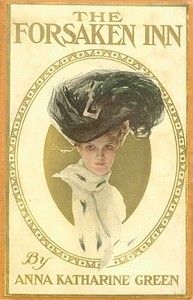
The Forsaken Inn: A Novel — Text and Context
(0 User reviews)
334
Project Gutenberg
2007
Not confirmed
Detective and mystery stories; United States -- Social life and customs -- 19th century -- Fiction
Readers of public-domain and historical texts
Project Gutenberg digital edition
en
Edition facts
Words
68,614
Reading time
299 min
Text sections
9
For The Forsaken Inn: A Novel — Text and Context, the stored edition analysis reports 68,614 words, 4 hr 59 min estimated reading time, and 9 detected text sections.
The text analysis averages about 18.7 words per sentence, while the detected sections provide another way to judge how the source is divided.
Project Gutenberg metadata also associates the work with “Detective and mystery stories,” connecting these edition facts with the source record’s subject description.
Source:
Project Gutenberg record #23641
Anna Katharine Green's 1890 mystery novel uses a frame narrative to recount a murder at a remote inn, with the story told through letters and diary entries. The excerpts reveal a focus on atmosphere, psychological tension, and the gradual unraveling of a crime, rather than rapid detection.
Editorial Edition Score
4.7/5
★★★★★
★★★★★
Calculated from edition completeness, EPUB availability, text structure and catalogue metadata. Not a user rating.
How this score is calculated
- Description quality20 pts
- Title & short description10 pts
- Source metadata20 pts
- Text length15 pts
- Chapters / structure15 pts
- EPUB file integrity20 pts
Total of 100 points, scaled to a 2.5-5.0 range. Editions with an empty description or a missing EPUB file are not scored.
Edition quality
Read the Text
I was riding between Albany and Poughkeepsie. It was raining furiously, and my horse, already weary with long travel, gave unmistakable signs of discouragement. I was, therefore, greatly relieved when, in the most desolate part of the road, I espied rising before me the dim outlines of a house, and was correspondingly disappointed when, upon riding forward, I perceived that it was but a deserted ruin I was approaching, whose fallen chimneys and broken windows betrayed a dilapidation so great that I could scarcely hope to find so much as a temporary shelter therein.
Nevertheless, I was so tired of the biting storm that I involuntarily stopped before the decayed and forbidding structure, and was, in truth, withdrawing my foot from the stirrup, when I heard an unexpected exclamation behind me, and turning, saw a chaise, from the open front of which leaned a gentleman of most attractive appearance.
"What are you going to do?" he asked.
"Hide my head from the storm," was my hurried rejoinder. "I am tired, and so is my horse, and the town, according to all appearances, must be at least two miles distant."
"No matter if it is three miles! You must not take shelter in that charnel-house," he muttered; and moved along in his seat as if to show me there was room beside him.
"Why," I exclaimed, struck with sudden curiosity, "is this one of the haunted houses we hear of? If so, I shall certainly enter, and be much obliged to the storm for driving me into so interesting a spot." I thought he looked embarrassed. At all events, I am sure he hesitated for a moment whether or not to ride on and leave me to my fate. But his better impulses seemed to prevail, for he suddenly cried: "Get in with me, and leave mysteries alone. If you want to come back here after you have learned the history of that house, you can do so; but first ride on to town and have a good meal. Your horse will follow easily enough after he is rid of your weight."
It was too tempting an offer to be refused; so thankfully accepting his kindness, I alighted from my horse, and after tying him to the back of the chaise, got in with this genial stranger. As I did so I caught another view of the ruin I had been so near entering.
"Good gracious!" I exclaimed, pointing to the structure that, with its projecting upper story and ghastly apertures, presented a most suggestive appearance, "if it does not look like a skull!"
My companion shrugged his shoulders, but did not reply. The comparison was evidently not a new one to him.
That evening, in a comfortable inn parlor, I read the following manuscript. It was placed in my hands by this kindly stranger, who in so doing explained that it had been written by the last occupant of the old inn I was so nearly on the point of investigating. She had been its former landlady, and had clung to the ancient house long after decay had settled upon its doorstep and desolation breathed from its gaping windows. She died in its north room, and from under her pillow the discolored leaves were taken, the words of which I now place before you.
I do not understand myself. I do not understand my doubts nor can I analyze my fears. When I saw the carriage drive off, followed by the wagon with its inexplicable big box, I thought I should certainly regain my former serenity. But I am more uneasy than ever. I cannot rest, and keep going over and over in my mind the few words that passed between us in their short stay under my roof. It is her face that haunts me. It must be that, for it had a strange look of trouble in it as well as sickness; but neither can I forget his, so fair, so merry, and yet so unpleasant, especially when he glanced at her and--as I could not help but think before they went away--when he glanced at me. I do not like him, and the chills creep over me whenever I remember his laugh, which was much too frequent to be decent, considering how poorly his young wife looked.
The novel opens with a traveler caught in a storm who is warned away from a decaying house by a stranger in a chaise. The stranger calls it a "charnel-house" and urges the narrator to "leave mysteries alone." This initial encounter establishes a tone of foreboding and withheld knowledge. The story then shifts to a letter from Anthony Tamworth to Mrs. Truax, detailing a discovery in a secret chamber and the subsequent pursuit of justice. The narrative is mediated through multiple voices, including Tamworth's formal account and Mrs. Truax's diary entries, which begin in September 1791. This layered structure distances the reader from the central events, creating suspense through delayed revelation.
The Frame Narrative and Its Effects
The excerpts show that The Forsaken Inn is not a straightforward detective story but a framed tale. The opening chapter presents a first-person narrator who encounters the inn and is told its history. Later, the story is continued through a letter from Anthony Tamworth to Mrs. Truax, and then through Mrs. Truax's own diary. This structure means that key events—such as the discovery in the secret chamber—are reported secondhand. The reader learns about the crime through Tamworth's summary: "a full account of our fatal discovery in the secret chamber." The diary entries add immediacy but also personal bias, as Mrs. Truax records her reactions to the legal proceedings. This narrative layering emphasizes the act of telling and retelling, rather than presenting events as they happen.
The Recluse and the Question of Vengeance
One of the most striking figures in the excerpts is the recluse, Mr. Felt, who declares: "I will do nothing for vengeance. That would be to make a slave of myself again." This line suggests a moral complexity that goes beyond simple crime and punishment. The recluse has spent years in isolation, and his response to the revelation of the crime is not anger but a weary acceptance of duty. He says, "what it is my duty to do, I shall do. It is all that is left to me now." This emphasis on duty over revenge sets the novel apart from more sensational mysteries. The excerpts also hint at a romantic backstory involving "Honora" and "wasted years," but the full context is not provided. The recluse's character adds a psychological depth that the catalog subject "Detective and mystery stories" might not fully capture.
Setting as a Character: The Inn and Its Atmosphere
The inn itself is described in terms of decay and menace. The traveler sees "fallen chimneys and broken windows" and notes a "dilapidation so great" that he can scarcely hope for shelter. Yet the building is also a site of hidden history, with a "secret chamber" that holds the key to the crime. The stormy weather and the remote location create a gothic atmosphere that is sustained throughout the excerpts. Mrs. Truax, the innkeeper, worries about the scandal's effect on her business: "public reprobation ruin its excellent character and custom." This practical concern grounds the supernatural-tinged setting in economic reality. The oak parlor, mentioned in chapter titles and as a setting for interviews, becomes a recurring locus of tension. The catalog subject "United States -- Social life and customs -- 19th century" is reflected in the details of travel by horse and chaise, the legal procedures, and the social norms that govern the characters' actions.
Readers should pay attention to the shifts in narrative voice and the way information is withheld or delayed. The excerpts suggest that the novel is as much about the process of uncovering a crime as it is about the crime itself. The recluse's moral stance and Mrs. Truax's pragmatic concerns offer two different lenses through which to view the events. The story moves between past and present, and the reader must piece together the timeline from the letters and diary entries. This is a mystery that rewards careful attention to who is speaking and when.
I’ve long loved how The Forsaken Inn keeps its secrets inside letters and diaries, the violence echoing through quiet rooms long after it happens. That same patient unease lingers in Holmes’s adventures, where even the smallest cuff-button waits a hundred pages to speak. The Adventures of the Eleven Cuff-Buttons Being one of the exciting episodes in the career of the famous detective Hemlock Holmes, as recorded by his friend Dr. Watson — Themes and Context shares that unhurried trust in shadows.
There are no reviews for this eBook.
There are no comments for this eBook.
Reader reflection
Take a moment to reflect on this book
Create a short personal record of your experience with this book.
Your progress
0
/
10
2
Was reading this book enjoyable?
3
Would you pass this book on to a friend?
4
What was the reading difficulty like?
5
Did anything about the book feel genuinely new?
6
Which part made the strongest impression?
7
Did the book deliver what you hoped for?
8
Did the book give you something worth debating?
9
What changed or sharpened your thinking?
10