1

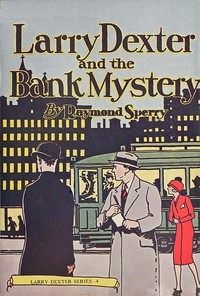
Larry Dexter and the bank mystery — Background and Themes
(0 User reviews)
1008
Project Gutenberg
2025
Not confirmed
Detective and mystery stories; Bank robberies -- Fiction; Dime novels
Readers of public-domain and historical texts
Project Gutenberg digital edition
en
Edition facts
Words
50,811
Reading time
221 min
Text sections
29
This digital edition of Larry Dexter and the bank mystery — Background and Themes is described by source-level measurements including 50,811 words, 3 hr 41 min estimated reading time, and 29 detected text sections.
The text analysis averages about 13.7 words per sentence, while the detected sections provide another way to judge how the source is divided.
Project Gutenberg metadata also associates the work with “Detective and mystery stories,” connecting these edition facts with the source record’s subject description.
Source:
Project Gutenberg record #75070
This editorial note examines how Raymond Sperry's 1912 dime novel uses rapid scene shifts, recurring false beards, and subway entrances to structure Larry Dexter's investigation of a million-dollar bank robbery in Wall Street.
Editorial Edition Score
4.8/5
★★★★★
★★★★★
Calculated from edition completeness, EPUB availability, text structure and catalogue metadata. Not a user rating.
How this score is calculated
- Description quality20 pts
- Title & short description10 pts
- Source metadata20 pts
- Text length15 pts
- Chapters / structure15 pts
- EPUB file integrity20 pts
Total of 100 points, scaled to a 2.5-5.0 range. Editions with an empty description or a missing EPUB file are not scored.
Edition quality
Read the Text
ss,” he mused. “It was that fellow’s fault, too.”
He glanced over the headings of the several papers he had purchased, and noted that a story he had written the day before for his own publication, had been used in a number of the rival sheets. This is always a gratification to a reporter.
“Guess they found I hadn’t missed much on that yarn,” said Larry to himself. “I was up against some hard work, too. Pshaw, I wish I hadn’t missed that express. I’ll be late if I wait for the next one, and if I take a local, that stops at all the stations, I’ll be worse off than ever. I’d like to see that fellow, and give him a bit of my mind. If he hadn’t been in such a hurry to get past me, we could have both made the express.”
Almost as Larry formed this thought he looked down the platform again, and, to his surprise, he saw the same young man step from behind a big iron pillar. He was eagerly looking over a paper, and did not seem to notice our hero.
“Humph!” mused Larry. “He didn’t get the express, after all. He had his trouble for his pains. I’m glad of it. He’s a regular bully, I guess,” and the young reporter looked closely at the individual who had caused the trouble. True, Larry might have been a bit at fault himself, for he had stood in the subway entrance as he was buying his papers, though, as he thought of it afterward, he knew there was plenty of room for the bully to have passed.
The fellow on whom Larry’s eyes were fixed was about the young reporter’s own age. He was well dressed, but there was a nervous, hurried manner in all his movements, and two or three times he looked up from the paper he held, glancing about the platform, as though he feared he might see some one whom he did not want to encounter.
All at once his eyes fell upon Larry, and he started visibly. Then he stepped back behind the pillar, as though to hide.
“Guess he thought I might try to make trouble for him,” mused Larry. “Well, he deserves it, but I’m not fond of rows, though he did give my shoulder a hard bang. It’ll be black and blue, I guess.”
The platform was beginning to be thronged with persons now, for the passengers who had accumulated just before Larry arrived had been whirled on their way downtown, and now a second crowd was on hand. This would be repeated several times, until the busy workers had all been transported to their stores or offices.
“I wonder what his object could have been, to rush down here, in plenty of time to have taken the express, and then wait?” thought Larry. “He’s a queer one.”
“City Hall Express!” suddenly called one of the subway guards, as the distant rumble of a train was heard. “Fourteenth street the first stop! City Hall Express!”
Larry lived well uptown in New York, and it meant a big saving in time to go on an express, that made few stops until City Hall was reached. The office of the _Leader_, where Larry worked, was but a short distance away from the municipal building.
The passengers crowded toward the edge of the platform, in readiness to board the train, the lights of which could now be seen. Larry noticed that the “pusher,” as he mentally called him, was standing not far away.
“If he runs into me again,” thought the young reporter, “I’ll be tempted to punch him, and take what follows. He ought to be taught a lesson.”
There was quite a throng about Larry, including a number of young ladies, as the train pulled in, and stopped with a grinding and screeching of brakes. The passengers crowded toward the open doors of the cars.
There was a sudden rush, and Larry noted, with an anger that he could hardly hold back, that the “pusher” was elbowing his way through the press, without any regard for the rights of others. The fellow was just ahead of Larry.
A moment later there was a cry of pain--a girl’s cry--and a voice exclaimed:
“Oh! My ankle! You’ve stepped on it. Oh, dear!”
The young reporter saw a girl, just in front of him, stagger, and almost fall. Larry put out his arm and caught her. At the same time he saw that it was the chap who had previously collided with him who had stepped on the girl’s foot, with cruel force.
The first chapter of Larry Dexter and the bank mystery opens with a collision: a rude man at a subway entrance nearly knocks the young reporter off his feet. That moment of physical jostling sets the pace for a story built on abrupt encounters and quick transitions. Sperry moves Larry from the subway steps to a newsboy’s stand, then to the newspaper office, and soon to the scene of a million-dollar bank robbery—all within a few pages. The structure favors movement over reflection, with each chapter ending on a note of suspense or discovery.
The excerpts show a pattern of recurring images: false beards, valises, and the constant threat of being watched. These details are not merely decorative; they function as structural markers, guiding the reader through a maze of false leads and coincidences. The narrative rarely lingers, preferring to propel Larry from one location to the next, mirroring the restless energy of a reporter on a hot story.
Subway Entrances and Sudden Meetings
The story’s opening scene—a near-collision at a subway entrance—is not an isolated incident. Throughout the excerpts, characters appear and disappear at thresholds: subway steps, park paths, boarding-house doors. These liminal spaces become the stage for crucial encounters. Larry meets the millionaire’s daughter, Grace, in Central Park; he spots a suspicious man with a false beard in a boarding-house room; he receives tips from strangers on street corners. Sperry uses these transitional settings to compress time and maintain momentum. The subway entrance, in particular, recurs as a symbol of the city’s relentless flow, where people brush past one another without explanation. Larry’s job is to stop and question, to turn chance meetings into leads. The structure of the novel mirrors this urban rhythm: each chapter begins with a new location or a new face, and the reader, like Larry, must piece together connections from fragments.
The False Beard as a Structural Motif
One of the most striking recurring details in the excerpts is the false beard. It appears first in the preface, where the author hints at disguises, and then in the narrative when Larry discovers a man in a boarding-house room “juggling with that false beard.” The beard is not merely a prop; it becomes a structural device that signals deception and instability. Sperry returns to it at key moments, reminding the reader that appearances are unreliable. The thief who purchased a valise from Miss Mason is described as having a beard, but that beard may be false. Larry’s investigation repeatedly circles back to questions of identity: who is the man in the boarding-house? Is he connected to the bank robber? The false beard ties these threads together, creating a visual shorthand for the mystery’s central puzzle. By repeating the image, Sperry gives the reader a concrete clue to track, even as the plot multiplies suspects and red herrings.
Movement Between Scenes: The Reporter’s Itinerary
Larry Dexter’s investigation is structured as a series of journeys. The excerpts show him moving from the subway to the newspaper office, from the office to Hackenford, from Hackenford back to the city, then to Central Park, and later to the hotel district. Each shift in location corresponds to a new piece of information or a new setback. Sperry rarely describes the travel itself; instead, he cuts directly to the destination, emphasizing the result of movement rather than the process. This technique keeps the narrative lean and focused on action. The reader follows Larry’s itinerary as a map of the investigation: each stop yields a clue, a dead end, or a surprise. The structure mirrors the real-world work of a reporter, who must constantly move to gather facts. At the same time, the rapid scene changes create a sense of urgency, as if the solution might slip away if Larry pauses too long.
Recurring Images of Pursuit and Surveillance
Throughout the excerpts, characters are described as watching or being watched. Larry feels he is being followed; the police keep a lookout for the man with the beard; the millionaire’s daughter notes Larry’s blushes and interprets his thoughts. This motif of surveillance extends to the narrative structure itself: the reader is placed in the position of an observer, piecing together clues alongside Larry. Sperry reinforces this by repeating certain phrases—"lookout," "trail," "trace"—that evoke a chase. Even when the action slows, as in the days when the bank mystery fades from the front page, the language of pursuit persists. The recurring image of the false beard, the valise, and the boarding-house all contribute to a sense that nothing is accidental. Every detail might be a sign. This layering of visual and verbal repetition gives the novel a cohesive texture, binding its episodic chapters into a unified investigation.
Readers approaching Larry Dexter and the bank mystery will find a story that moves quickly and rewards attention to small details. The false beard, the subway entrance, and the constant shifting of scenes are not merely background color—they are the architecture of the mystery. Pay close attention to where Larry goes and whom he meets; the novel’s structure is built on these transitions. The clues are scattered, but they are not random. Sperry’s method is to keep the reader moving, just as Larry must keep moving, until the final surprise is revealed.
I keep thinking about how that old Larry Dexter story used those quick subway exits to shift scenes, almost like losing a thread on purpose. There’s a particular quiet ache in that, the way a mystery lingers under the surface of daily movement. The Leak — Themes and Context reminded me of that same unhurried patience, the soft thrill of something hidden in plain sight. It stayed with me gently, like a half-remembered whistle.
There are no reviews for this eBook.
There are no comments for this eBook.
Reader reflection
What did you think of this book?
Answer a few questions and save a private reflection on this device.
Your progress
0
/
10
2
Did this book hold your interest?
3
How likely are you to recommend this book?
4
How demanding did the text feel?
5
How clear did the writing feel?
6
Could you apply anything you learned?
7
How strong was your personal connection to the text?
8
Did any part of the book stay with you emotionally?
9
What is the main idea you are taking away?
10