1

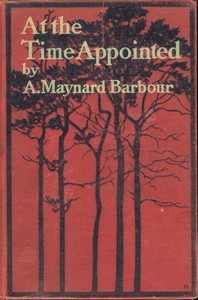
At the Time Appointed — Story, Setting & Ideas
(0 User reviews)
1543
Project Gutenberg
2007
Not confirmed
Detective and mystery stories
Readers of public-domain and historical texts
Project Gutenberg digital edition
en
Edition facts
Words
110,265
Reading time
480 min
Text sections
13
Before opening At the Time Appointed — Story, Setting & Ideas, the edition data offers a quick orientation: 110,265 words, 8 hr estimated reading time, and 13 detected text sections.
The text analysis averages about 20.5 words per sentence, while the detected sections provide another way to judge how the source is divided.
Project Gutenberg metadata also associates the work with “Detective and mystery stories,” connecting these edition facts with the source record’s subject description.
Source:
Project Gutenberg record #21892
A mystery novel set in Colorado mining country, where a man's past and a woman's gift of a dog intertwine with mountain landscapes and a looming threat. The catalog subject 'Detective and mystery stories' fits, but the excerpts focus more on emotional farewells and scenic description than on detection.
Editorial Edition Score
4.8/5
★★★★★
★★★★★
Calculated from edition completeness, EPUB availability, text structure and catalogue metadata. Not a user rating.
How this score is calculated
- Description quality20 pts
- Title & short description10 pts
- Source metadata20 pts
- Text length15 pts
- Chapters / structure15 pts
- EPUB file integrity20 pts
Total of 100 points, scaled to a 2.5-5.0 range. Editions with an empty description or a missing EPUB file are not scored.
Edition quality
Read the Text
His was a nature capable of producing the divinest harmonies or the wildest discords, according to the hand that swept the strings as yet untouched.
For more than an hour Darrell slept. He was awakened by the murmur of voices near him, confused at first, but growing more distinct as he gradually recalled his surroundings, until, catching the name of "Parkinson," he was instantly on the alert.
"Yes," a pleasant voice was saying, "I understand the Ajax is for sale if the owners can get their price, but they don't want less than a cold million for it, and it's my opinion they'll find buyers rather scarce at that figure when it comes to a show down."
"Well, I don't know; that depends," was the reply. "The price won't stand in the way with my people, if the mine is all right. They can hand over a million--or two, for that matter--as easily as a thousand, if the property is what they want, but they've got to know what they're buying. That's what I'm out here for."
Taking a quiet survey of the situation, Darrell found that the section opposite his own--which, upon his return from the dining-car, had contained only a motley collection of coats and grips--was now occupied by a party of three, two of whom were engaged in animated conversation. One of the speakers, who sat facing Darrell, was a young man of about two-and-twenty, whose self-assurance and assumption of worldly wisdom, combined with a boyish impetuosity, he found vastly amusing, while at the same time his frank, ingenuous eyes and winning smile of genuine friendliness, revealing a nature as unsuspecting and confiding as a child's, appealed to him strangely and drew him irresistibly towards the young stranger. The other speaker, whom Darrell surmised to be Parkinson, was considerably older and was seated facing the younger man, hence his back was towards Darrell; while the third member of the party, and by far the eldest, of whose face Darrell had a perfect profile view, although saying little, seemed an interested listener.
The man whom Darrell supposed to be Parkinson inquired the quickest way of reaching the Ajax mine.
"Well, you see it's this way," replied the young fellow. "The Ajax is on a spur that runs out from the main line at Ophir, and the train only runs between there and Ophir twice a week, Wednesdays and Saturdays. Let's see, this is Wednesday; we'll get into Ophir to-morrow, and you'll have to wait over until Saturday, unless you hire a rig to take you out there, and that's pretty expensive and an awfully rough jaunt besides."
"I don't mind the expense," retorted the other, "but I don't know as I care to go on any jaunts over your mountain roads when there's no special necessity for it; I can get exercise enough without that."
"I tell you what, Mr. Parkinson," said the young fellow, cordially, "you and your friend here, Mr. Hunter,"--Darrell started at the mention of the latter name,--"had better wait over till Saturday, and in the mean time I'll take you people out to Camp Bird, as we call it, and show you the Bird Mine; that's our mine, you know, and I tell you she is a 'bird,' and no mistake. You'll be interested in looking her over, though I'll tell you beforehand she's not for sale."
"Do I understand that you have an interest in this remarkable mine, Mr. Whitcomb?" Parkinson inquired, a tinge of amusement in his tone.
"Not in the way you mean; that is, not yet, though there's no telling how soon I may have if things turn out as I hope," and the boyish cheek flushed slightly. "But I know what I'm talking about all the same. My uncle, D. K. Underwood, is a practical mining man of nearly thirty years' experience, and what he doesn't know about mines and mining isn't worth knowing. He's interested in a dozen or so of the best mines in the State, but I don't think he would exchange his half-interest in the Bird Mine for all his other holdings put together. She's a comparatively new mine yet, but taking into consideration her depth and the amount of development, she's the best-paying mine in the State. Here, let me show you something." And hastily pulling a note-book from his pocket, he took therefrom a narrow slip of paper which he handed to the expert.
"There's a statement," he continued, "made out by the United States Assay Office, back here at Galena, that will show you the returns from a sixty days' run at the Bird mill; what do you think of that?"
In At the Time Appointed, the opening chapters introduce John Darrell, a man whose past is hinted at through his interactions with Kate and her father. The narrative voice is measured, with a tendency toward romantic description of the Colorado landscape—mountain trails, snow-crowned peaks, and silver streams—that occupies as much space as the mystery elements. The catalog subject 'Detective and mystery stories' is accurate, but the excerpts reveal a novel that spends considerable time on emotional tensions and natural scenery before any crime or investigation appears.
Landscape as Emotional Mirror
The excerpts repeatedly use the mountain setting to reflect the characters' inner states. When Darrell and Kate ascend the 'divide,' the grandeur of the view—'vast mountain ranges, unbroken' and 'gigantic peaks, snow-crowned'—is described in detail, and their conversation about the future is punctuated by the physical effort of climbing. The two tiny streams that 'plunged in opposite directions' serve as a direct emblem of their parting, a metaphor the narrator makes explicit: 'A fit emblem of our loves.' This technique of using natural features to externalize emotion is consistent throughout the available text, suggesting that the landscape is not merely backdrop but an active participant in the story's emotional architecture.
The Dog as a Token of Character
Duke, the dog, appears in the excerpt as a silent witness to the farewell between Darrell and Kate. He is described as 'perplexed by the long silence,' rising to look into Kate's eyes 'with mute inquiry.' Kate offers Duke to Darrell as a 'parting gift,' explaining that her father dislikes the dog because Duke is unfriendly to Mr. Walcott. This exchange reveals several things: Kate's father is a figure of authority who 'absolutely hates' the dog; Mr. Walcott is a rival or threat; and Darrell is trusted enough to receive a living token of Kate's affection. The dog functions as a barometer of loyalty and danger, a detail that may prove significant as the mystery unfolds.
Pacing and the Delayed Mystery
Despite being cataloged under 'Detective and mystery stories,' the excerpts from the first chapter and later sections show no detective work, no crime scene, and no investigation. Instead, the narrative moves slowly, with long passages of dialogue and description. The chapter titles—'A Night's Work,' 'Life? or Death?,' 'Two Crimes by the Same Hand'—promise action, but the actual text lingers on emotional farewells and scenic vistas. This gap between catalog promise and textual delivery suggests that the mystery elements may be concentrated in later chapters, or that the novel belongs to a subgenre where romantic and regional detail precedes the puzzle. Readers expecting immediate suspense will need patience.
The excerpts from At the Time Appointed show a novel that balances romantic landscape writing with hints of familial conflict and a looming threat. The catalog subject 'Detective and mystery stories' is accurate, but the pacing is deliberate, and the mystery is slow to surface. Readers who enjoy atmospheric settings and emotional nuance alongside their puzzles will find this a distinctive entry in early twentieth-century crime fiction.
I kept thinking about that Colorado book’s final dog scene, the quiet ache of a farewell against all that granite. It reminded me, oddly, of how The Come Back — Edition Insights treats a return not as triumph but as a slow exhale. Some stories just leave that weight behind, don’t they—the way a mountain stays in your chest long after you’ve left. The Come Back — Edition Insights felt like that.
There are no reviews for this eBook.
There are no comments for this eBook.
Reader reflection
What was your reading experience?
Capture what you thought, learned, and would like to remember.
Your progress
0
/
10
2
How did the book work for you overall?
3
Would you encourage someone else to read it?
4
Did the language feel accessible?
5
Would you like to discuss this book with someone?
6
Was the book what you thought it would be?
7
What was its emotional impact?
8
How distinctive were its ideas or approach?
9
What did this book teach you most?
10