1

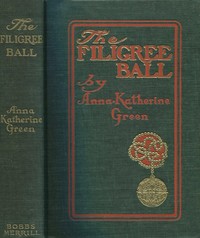
The Filigree Ball Being a full and true account of the solution of the mystery concerning the Jeffrey-Moore affair — Background and Themes
(0 User reviews)
314
Project Gutenberg
2000
Not confirmed
Detective and mystery stories
Readers of public-domain and historical texts
Project Gutenberg digital edition
en
Edition facts
Words
94,541
Reading time
412 min
Text sections
28
Before opening The Filigree Ball Being a full and true account of the solution of the mystery concerning the Jeffrey-Moore affair — Background and Themes, the edition data offers a quick orientation: 94,541 words, 6 hr 52 min estimated reading time, and 28 detected text sections.
The text analysis averages about 19.6 words per sentence, while the detected sections provide another way to judge how the source is divided.
Project Gutenberg metadata also associates the work with “Detective and mystery stories,” connecting these edition facts with the source record’s subject description.
Source:
Project Gutenberg record #2371
A detective narrates the Jeffrey-Moore affair from his own standpoint, revealing a case with complications beyond public knowledge. The narrative shifts from the forbidden room to courtroom drama, with a white ribbon and a hidden note as pivotal evidence.
Editorial Edition Score
4.9/5
★★★★★
★★★★★
Calculated from edition completeness, EPUB availability, text structure and catalogue metadata. Not a user rating.
How this score is calculated
- Description quality20 pts
- Title & short description10 pts
- Source metadata20 pts
- Text length15 pts
- Chapters / structure15 pts
- EPUB file integrity20 pts
Total of 100 points, scaled to a 2.5-5.0 range. Editions with an empty description or a missing EPUB file are not scored.
Edition quality
Read the Text
te is a priest with a sprinkling of holy water; and I for one—”
He was actually sliding off.
With a smothered oath I drew him back.
“See here!” I cried, “you’re not a babe in arms. Come on or— Well, what now?”
He had clenched my arm and was pointing to the door which was slowly swaying to behind us.
“Notice that,” he whispered. “No key in the lock! Men use keys but—”
My patience could stand no more. With a shake I rid myself of his clutch, muttering:
“There, go! You’re too much of a fool for me. I’m in for it alone.” And in proof of my determination, I turned the slide of the lantern and flashed the light through the house.
The effect was ghostly; but while the fellow at my side breathed hard he did not take advantage of my words to make his escape, as I half expected him to. Perhaps, like myself, he was fascinated by the dreary spectacle of long shadowy walls and an equally shadowy staircase emerging from a darkness which a minute before had seemed impenetrable. Perhaps he was simply ashamed. At all events he stood his ground, scrutinizing with rolling eyes that portion of the hall where two columns, with gilded Corinthian capitals, marked the door of the room which no man entered without purpose or passed without dread. Doubtless he was thinking of that which had so frequently been carried out between those columns. I know that I was; and when, in the sudden draft made by the open door, some open draperies hanging near those columns blew out with a sudden swoop and shiver, I was not at all astonished to see him lose what little courage had remained in him. The truth is, I was startled myself, but I was able to hide the fact and to whisper back to him, fiercely:
“Don’t be an idiot. That curtain hides nothing worse than some sneaking political refugee or a gang of counterfeiters.”
“Maybe. I’d just like to put my hand on Upson and—”
I had just heard something.
For a moment we stood breathless, but as the sound was not repeated I concluded that it was the creaking of that far-away shutter. Certainly there was nothing moving near us.
“Shall we go upstairs?” whispered Hibbard.
“Not till we have made sure that all is right down here”
A door stood slightly ajar on our left.
Pushing it open, we looked in. A well furnished parlor was before us.
“Here’s where the wedding took place,” remarked Hibbard, straining his head over my shoulder.
There were signs of this wedding on every side. Walls and ceilings had been hung with garlands, and these still clung to the mantelpiece and over and around the various doorways. Torn-off branches and the remnants of old bouquets, dropped from the hands of flying guests, littered the carpet, adding to the general confusion of overturned chairs and tables. Everywhere were evidences of the haste with which the place had been vacated as well as the superstitious dread which had prevented it being re-entered for the commonplace purpose of cleaning. Even the piano had not been shut, and under it lay some scattered sheets of music which had been left where they fell, to the probable loss of some poor musician. The clock occupying the center of the mantelpiece alone gave evidence of life. It had been wound for the wedding and had not yet run down. Its tick-tick came faint enough, however, through the darkness, as if it too had lost heart and would soon lapse into the deadly quiet of its ghostly surroundings.
“It’s—it’s funeral-like,” chattered Hibbard.
He was right; I felt as if I were shutting the lid of a coffin when I finally closed the door.
Our next steps took us into the rear where we found little to detain us, and then, with a certain dread fully justified by the event, we made for the door defined by the two Corinthian columns.
It was ajar like the rest, and, call me coward or call me fool—I have called Hibbard both, you will remember—I found that it cost me an effort to lay my hand on its mahogany panels. Danger, if danger there was, lurked here; and while I had never known myself to quail before any ordinary antagonist, I, like others of my kind, have no especial fondness for unseen and mysterious perils.
The narrator, a detective whose talents have not been recognized at headquarters, opens by confessing an ambition to distinguish himself on a big case. He finds it in the Jeffrey-Moore affair, which he insists had greater complications than the public ever knew. The story begins at the station-house when Uncle David, a moody old gentleman with a mastiff named Rudge, enters in a state of suppressed agitation. The detective’s voice is self-aware and slightly defensive, as he anticipates charges of self-exploitation. This personal framing immediately establishes the narrative as a first-hand account, not an official report.
A Detective’s Ambition and Unease
The narrator’s opening confession—that he hoped for a big case to prove himself—sets a tone of personal investment. He describes his ambition as something “not yet expressed in words,” hinting at a professional frustration that colors his account. When Uncle David appears, the detective notes the “uneasy light in his small gray eyes” and an “unmistakable tremor in his tones,” observations that reveal his habit of reading people’s surfaces. The mastiff Rudge is introduced as a constant companion, a detail that recurs and adds a layer of silent witness to the proceedings. The narrator’s voice is precise but tinged with emotion; he admits to being “a lover of women” and ends the opening with a broken sentence—“But I am keeping you from the story itself”—as if struggling to contain his feelings.
The White Ribbon and the Unspoken
A key courtroom scene hinges on a white satin ribbon. A witness recounts how the deceased asked her brother to tie it around her wrist with “a knot under and a bow on top, so that it can not slip off.” The brother complied, thinking it held a fan or bouquet, but it concealed something he refuses to name. The coroner presses him, but the witness’s reluctance creates a charged silence. Later, Miss Tuttle is questioned about retrieving a book from a shelf—the book where a note was left for Mr. Jeffrey. She admits to taking the book but hesitates to explain why. The coroner’s questions are sharp, and the narrative notes the “wavering tide of favor” as responses shift. The ribbon and the book become objects that carry more weight than their physical presence suggests, their meanings deferred by the characters’ evasions.
Shifts in Pace and Perspective
The narrative moves between the detective’s reflective opening and the rapid-fire exchanges of the inquest. In the courtroom, dialogue dominates: questions are met with faltering answers, and the coroner’s tone takes on an “acrid note” as he perceives Miss Tuttle’s composure. The prose tightens during these scenes, with short sentences like “She had no answer ready” and “Again the tide swung back.” By contrast, the detective’s framing passages are more expansive, allowing for interior commentary. This alternation creates a rhythm of tension and release. The excerpts do not reveal the outcome, but the structure suggests that the detective’s personal stake will continue to shape how the story unfolds, even as the legal machinery grinds forward.
Readers should attend to the narrator’s self-positioning: he is both participant and storyteller, and his judgments may be as revealing as the facts he reports. The ribbon, the book, and the dog Rudge are small details that accumulate significance through repetition. The pace shifts between the detective’s reflective asides and the clipped dialogue of the courtroom, creating a layered account of a case that resists easy resolution.
I found myself thinking about that hidden note in the Jeffrey-Moore affair again, how some truths surface only when you stop looking. There’s a spaciousness to memory like that, the way a quiet patrol lets a landscape reveal its own secrets. I suspect the same patience lives in The long patrol — Key Ideas to Explore, waiting like a familiar trail on a late afternoon.
There are no reviews for this eBook.
There are no comments for this eBook.
Reader reflection
Record your reading impressions
A brief reflection can help important ideas stay with you longer.
Your progress
0
/
10
2
Was reading this book enjoyable?
3
Would you encourage someone else to read it?
4
Did the language feel accessible?
5
How distinctive were its ideas or approach?
6
How would you describe its reading pace?
7
Did the book give you something worth debating?
8
Would a second reading be valuable?
9
What changed or sharpened your thinking?
10