
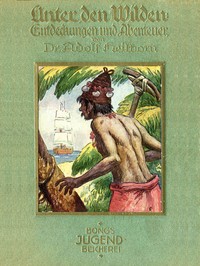
Unter den Wilden: Entdeckungen und Abenteuer by Adolf Heilborn
I picked up 'Unter den Wilden' expecting a dusty old adventure tale, but what I found was something much more interesting and complicated. Adolf Heilborn, a doctor and naturalist, traveled to the Pacific as part of a German colonial expedition in the early 1900s. This book is his diary of that time.
The Story
There isn't a single plot in the traditional sense. Instead, Heilborn takes us along as he sails up rivers, sets up camps, and tries to make contact with the various communities living in the interior. He describes the landscapes in vivid detail—steamy jungles, imposing mountains—and fills pages with observations about plants, animals, and insects. But the heart of the book is his encounters with people. He documents their homes, tools, rituals, and daily life with the eye of a scientist. He relies on their knowledge to survive, yet constantly views them through the lens of his own time, labeling them as 'primitive.' The story is the journey itself: a slow immersion into a place that challenges everything he thinks he knows.
Why You Should Read It
This book is a powerful primary source. It's not a modern, polished history book. It's raw, personal, and full of the biases of its era, which is precisely what makes it so valuable. Reading it is an exercise in reading between the lines. When Heilborn describes a beautifully crafted canoe or a complex trading system, you see the skill and sophistication of the people he's observing, even if he doesn't fully acknowledge it. The discomfort you might feel with his worldview is part of the point. It forces you to think about how we understand other cultures, both then and now. It’s less about cheering for an explorer and more about witnessing a historical moment firsthand, with all its messy contradictions.
Final Verdict
This isn't a light, escapist read. It's for the curious reader who loves history straight from the source. If you enjoyed the travel writings of someone like John Muir but want to grapple with the tougher, colonial aspects of exploration, this is for you. It's perfect for anyone interested in the history of Papua New Guinea, the era of colonial expeditions, or the simple, human desire to see what's over the next hill—even when we're not prepared for what we find. Approach it with a critical mind, and you'll be rewarded with a truly unique perspective.
There are no legal restrictions on this material. Use this text in your own projects freely.
Donna Torres
10 months agoThe layout is very easy on the eyes.
Jackson Torres
9 months agoTo be perfectly clear, it manages to explain difficult concepts in plain English. A true masterpiece.
Steven Brown
3 months agoRecommended.
Christopher Ramirez
4 months agoSurprisingly enough, the pacing is just right, keeping you engaged. Definitely a 5-star read.


David Nguyen
11 months agoThis book was worth my time since the arguments are well-supported by credible references. Worth every second.