1

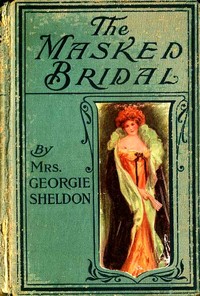
The Masked Bridal — Themes and Context
(0 User reviews)
893
Project Gutenberg
2009
Not confirmed
Young women -- Fiction; Mystery fiction
Readers of public-domain and historical texts
Project Gutenberg digital edition
en
Edition facts
Words
109,886
Reading time
478 min
Text sections
11
The catalog record for The Masked Bridal — Themes and Context provides practical reading context through 109,886 words, 7 hr 58 min estimated reading time, and 11 detected text sections.
The text analysis averages about 20.9 words per sentence, while the detected sections provide another way to judge how the source is divided.
Project Gutenberg metadata also associates the work with “Young women -- Fiction,” connecting these edition facts with the source record’s subject description.
Source:
Project Gutenberg record #29524
A young woman named Edith, coerced into a mock marriage with the menacing Emil Correlli, flees Boston for New York with the help of a sympathetic Italian woman, Giulia. The prologue warns against treating marriage lightly, setting up a plot where a staged 'masked bridal' leads to real peril.
Editorial Edition Score
4.8/5
★★★★★
★★★★★
Calculated from edition completeness, EPUB availability, text structure and catalogue metadata. Not a user rating.
How this score is calculated
- Description quality20 pts
- Title & short description10 pts
- Source metadata20 pts
- Text length15 pts
- Chapters / structure15 pts
- EPUB file integrity20 pts
Total of 100 points, scaled to a 2.5-5.0 range. Editions with an empty description or a missing EPUB file are not scored.
Edition quality
Read the Text
TWO UNEXPECTED VISITORS.
It was a cold, raw night in December, and the streets of New York city, despite their myriads of electric lights and gayly illuminated shop windows, were dismal and forlorn beyond description.
The sky was leaden. A piercing wind was blowing up from the East River, and great flakes of snow were beginning to fall, when, out of the darkness of a side street, there came the slight, graceful figure of a young girl, who, crossing Broadway, glided into the glare of the great arclight that was stationed directly opposite a pawnbroker's shop.
She halted a moment just outside the door, one slender, shabbily-gloved hand resting irresolutely upon its polished knob, while an expression of mingled pain and disgust swept over her pale but singularly beautiful face.
Presently, however, she straightened herself, and throwing up her head with an air of resolution, she turned the knob, pushed open the door, and entered the shop.
It was a large establishment of its kind, and upon every hand there were indications that that relentless master, Poverty, had been very busy about his work in the homes of the unfortunate, compelling his victims to sacrifice their dearest possessions to his avaricious grasp.
The young girl walked swiftly to the counter, behind which there stood a shrewd-faced Israelite, who was the only occupant of the place, and whose keen black eyes glittered with mingled admiration and cupidity as they fastened themselves upon the lovely face before him.
With an air of quiet dignity the girl lifted her glance to his, as she produced a ticket from the well-worn purse which she carried in her hand.
"I have come, sir, to redeem the watch upon which you loaned me three dollars last week," she remarked, as she laid the ticket upon the counter before him.
"Aha! an' so, miss, you vishes to redeem de vatch!" remarked the man, with a crafty smile, as he took up the ticket under pretense of examining it to make sure that it was the same that he had issued to her the week previous.
"An' vat vill you redeem 'im mit?" he pursued, with a disagreeable leer.
"With the same amount that you advanced me, of course," gravely responded the girl.
"Ah! ve vill zee--ve vill zee! Vhere ish de money?" and the man extended a huge soiled hand to her.
"I have a five-dollar gold-piece here," she returned, as she took it from her purse and deposited it also upon the counter; for she shrank from coming in contact with that repulsive, unwashed hand.
The pawnbroker seized the coin greedily, his eyes gleaming hungrily at the sight of the yellow gold, while he examined it carefully to assure himself that it was genuine.
"So! so! you vill vant de vatch," he at length observed, in a sullen tone, as if he did not relish the idea of returning the valuable time-piece upon which he had advanced the paltry sum of three dollars. "Vell!" and irritably pulling out a drawer as he spoke, he dropped the coin into it. "Ah!" he cried, with a sudden start and an angry frown, as it dropped with a ringing sound upon the wood, "vat you mean? You would sheat me!--you vould rob me! De money ish not goot--de coin ish counterfeit! I vill send for de officer--you shall pe arrested--you von little meek-faced robber! Ah!" he concluded, in a shrill tone of well-simulated anger, as he shook his fist menacingly before his companion.
The fair girl regarded him in frightened astonishment as he poured forth this torrent of wrathful abuse upon her, while her beautiful blue eyes dilated and her delicate lips quivered with repressed excitement.
"I do not understand you!--what do you mean, sir?" she at length demanded, when she could find voice for speech.
"You play de innocence very vell!" he sneered; then added, gruffly: "You vill not get der vatch, for you haf prought me bad money."
"You are mistaken, sir; I have just received that gold-piece from a respectable lawyer, for whom I have been working during the week, and I know he would not take advantage of me by paying me with counterfeit money," the young girl explained; but she had, nevertheless, grown very pale while speaking.
"Ah! maybe not--maybe not, miss; not if he knew it," said the pawnbroker, now adopting a wheedling and pitiful tone as he drew forth the shining piece and pushed it toward her. "Somebody may haf sheeted him; but it haf not der true ring of gold, and you'll haf to bring me der t'ree dollars some oder time, miss."
The prologue of The Masked Bridal opens with a stern declaration: marriage is the most sacred event in a woman's life and should never be treated lightly. This moral warning directly frames the story that follows, in which a young woman named Edith agrees to play a bride in a masked theatrical performance—only to find herself trapped in a coerced union with the villainous Emil Correlli. The excerpts show Edith rejecting costly gifts from Correlli, calling them loathsome, and plotting a desperate escape from his Boston house. She enlists Giulia Fiorini, an Italian woman with a child, to distract Correlli while she flees to New York. The narrative blends sensational escape with moral commentary, though the excerpts do not reveal whether Edith's flight succeeds or the marriage is annulled.
The Prologue's Moral Frame
The prologue establishes a didactic tone unusual for a mystery novel: it directly addresses the reader on the gravity of marriage, warning against treating it as a game for honor, wealth, or social position. This opening suggests the author intends the story as both entertainment and moral instruction. The phrase 'play at marriage, even for a plausible pretext, is likely to be very imprudent' explicitly condemns the central plot device—a staged wedding. However, the excerpts do not show whether the narrative consistently upholds this moral stance or complicates it through Edith's actions. The prologue's voice is authoritative and sermon-like, contrasting with the melodramatic escape scene later.
Edith's Flight and the Role of Giulia
In the escape sequence, Edith demonstrates resourcefulness and determination. She plans her departure down to the minute, noting a train at three o'clock from Columbus Avenue station. She enlists Giulia, a woman who initially hated her but now 'worships' her, to create a diversion. Giulia's character is introduced as a mother with a 'care-lined face,' and her child is described as a 'dear little fellow.' The emotional exchange—Giulia's tears, her kiss on Edith's hand—adds a sentimental layer. Yet the excerpts do not explain Giulia's prior hatred or her connection to Correlli. The scene relies on rapid trust and heightened emotion, typical of sensational fiction, but leaves Giulia's backstory unexplored in the provided text.
The Masked Bridal as a Plot Device
The title event—the masked bridal—is described in the prologue as a play within the story, where actors wear masks to illustrate a 'novel situation.' The excerpts do not depict the performance itself, only its aftermath: Edith is apparently married to Correlli against her will. She refers to him as 'the man she both hated and feared' and speaks of having the marriage annulled. The mask motif may symbolize deception or hidden identities, but the excerpts offer no further clues. The catalog subject 'Mystery fiction' fits the concealed ceremony and Edith's flight, but the prologue's moralizing suggests the mystery may be less about detection than about the consequences of a rash act.
Readers should note that the excerpts cover only the prologue and two chapters (XXII and XXIII), leaving much of the plot—including the resolution of Edith's escape and the fate of the masked bridal—unknown. The catalog subjects 'Young women -- Fiction' and 'Mystery fiction' accurately describe the protagonist and the central predicament, but the moralistic prologue adds a layer not always present in mystery novels. Pay attention to how the author balances sensational action with didactic commentary as the story unfolds.
That book about Edith and Correlli lingered with me, especially the lingering dread that follows her to New York. It reminded me, oddly, of something I felt reading The Silver Butterfly — A Reader’s Guide—that quiet hum of consequence underneath a pretty surface. Both left me sitting alone afterward, just thinking about how often we mistake a disguise for a real life.
There are no reviews for this eBook.
There are no comments for this eBook.
Reader reflection
Record your reading impressions
A brief reflection can help important ideas stay with you longer.
Your progress
0
/
10
2
Did this book hold your interest?
3
Would you pass this book on to a friend?
4
What was the reading difficulty like?
5
How personally connected did you feel to the book?
6
How valuable was this book for your own interests?
7
Did the book deliver what you hoped for?
8
Could you follow the author’s main argument?
9
What is the main idea you are taking away?
10