
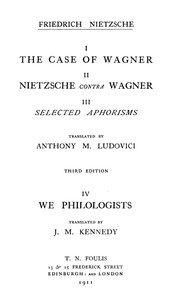
The Case of Wagner by Friedrich Wilhelm Nietzsche
Okay, let's set the scene. Imagine Friedrich Nietzsche, the philosopher who famously declared 'God is dead,' sitting in a room, listening to an opera by his former hero, Richard Wagner. But instead of feeling inspired, he's getting more and more annoyed. The Case of Wagner is that feeling turned into a book. It's Nietzsche's very public, very passionate takedown of the composer he once adored.
The Story
There's no traditional plot here. The 'story' is the collapse of a friendship and a philosophical betrayal. Nietzsche lays out his case like a prosecutor. He attacks Wagner's later works, like the opera Parsifal, for being full of Christian pity and resignation. He mocks the overwhelming, emotional style of the music, calling it theatrical and dishonest. For Nietzsche, true art should be life-affirming, clear, and strong—like Mediterranean sunshine. Wagner's art, he claims, is like a foggy German swamp: it's confusing, it makes you feel sick, and it celebrates weakness. This book is Nietzsche breaking up with the cultural father figure of Germany and explaining, in brutal detail, exactly why.
Why You Should Read It
You should read this not to become a Wagner expert, but to watch a brilliant mind at a boiling point. Nietzsche's anger is electric and his insults are legendary (calling Wagner a 'miniaturist' who stitches tiny effects together is a personal favorite). Beyond the drama, it makes you think hard about art's purpose. Is art supposed to comfort us or challenge us? Should it manipulate our emotions or clarify our thinking? Nietzsche forces you to pick a side. It’s also weirdly funny in its sheer intensity. You can almost see him pacing the room, gesturing wildly at the phonograph.
Final Verdict
This is a must-read for anyone interested in the messy, personal side of philosophy and art criticism. It's perfect for music lovers ready to see a sacred cow scrutinized, for readers who enjoy a good intellectual feud, and for anyone who's ever had a dramatic change of heart about an artist they used to love. If you prefer your philosophy clean, calm, and systematic, look elsewhere. But if you want it passionate, personal, and a little bit vicious, Nietzsche is your guy. Just be prepared—you might never listen to The Ring Cycle the same way again.
This text is dedicated to the public domain. It is now common property for all to enjoy.





Melissa Robinson
9 months agoI have to admit, it challenges the reader's perspective in an intellectual way. Exactly what I needed.