
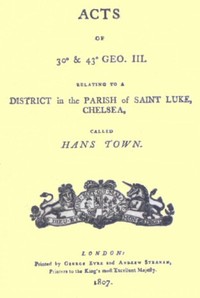
Acts of 30° & 43° Geo. III. relating to a district in the Parish of Saint Luke,…
Let's be clear from the start: this is not a book in the traditional sense. You won't find characters or a plot in the way you expect. 'Acts of 30° & 43° Geo. III' is a primary source document, a printed compilation of two laws passed in 1790 and 1803 concerning a district in London's Parish of Saint Luke. It reads exactly like you'd think government legislation from 200 years ago would: precise, legalistic, and concerned with boundaries, authorities, and regulations.
The Story
There is no narrative here, only consequences. The 'story' is the problem that forced Parliament to act. The first act, from 1790, establishes new rules and likely a new governing body for the district. Something about the old way wasn't working. Then, thirteen years later, a second act is passed. Why? Was the first solution insufficient? Did new troubles arise? The text details the 'what'—new powers for trustees, procedures for paving roads, raising funds through local taxes—but it stubbornly refuses to spell out the 'why.' The mystery is in the gap between these two legislative actions. What was life like in Saint Luke's that needed this much official attention?
Why You Should Read It
This book is a challenge, and that's why I found it so rewarding. Reading it forces you to actively investigate. You become the reader-as-historian, sifting through the dry text for clues. A mention of 'lighting the streets' hints at safety concerns. Regulations about 'scavengers' (early garbage collectors) suggest issues with sanitation. It's a puzzle where you have to imagine the living, breathing, probably messy world that provoked these tidy laws. It turns history from a story told to you into a mystery you're solving.
Final Verdict
This is a niche pick, but a fascinating one. It's perfect for history buffs who love original documents and for anyone who enjoys true crime or mystery, but prefers the clues to come from ledgers and laws instead of eyewitness accounts. You need patience and a bit of curiosity to fill in the blanks. If you want a story handed to you, look elsewhere. But if you like the idea of holding a piece of the past and deciphering its secrets, this unknown author's book of laws is a strangely compelling read.
Legal analysis indicates this work is in the public domain. You are welcome to share this with anyone.



George Rodriguez
2 months agoI have to admit, the plot twists are genuinely surprising. Exceeded all my expectations.