
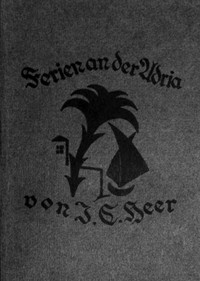
Ferien an der Adria: Bilder aus Süd-Österreich by J. C. Heer
Published in 1908, Ferien an der Adria is a travelogue and a love letter. J.C. Heer, a Swiss author with a keen eye for detail, takes us on a leisurely journey through the southernmost reaches of the Austrian Empire, the sun-baked coastal regions that felt more Italian than Viennese.
The Story
There's no traditional plot. Instead, Heer acts as our guide, moving from scene to scene like a painter setting up his easel. We visit bustling port towns where languages mix, quiet villages clinging to cliffs, and ancient Roman ruins being slowly reclaimed by nature. We meet fishermen mending their nets, farmers tending vineyards on terraced hillsides, and families gathering for simple, joyous feasts. The 'story' is in the atmosphere—the scent of pine and salt air, the brilliant blue of the sea, the golden light of a long afternoon. Heer captures the unique cultural blend of the region, a place where Germanic, Slavic, and Italian influences created a distinct way of life.
Why You Should Read It
I picked this up on a whim, looking for an armchair vacation, and was completely charmed. Heer’s writing has this wonderful, observational quality. He notices everything: the way the light filters through a grape arbor, the specific design of a fishing boat, the songs people sing in the evening. It’s a masterclass in descriptive writing that makes you feel like you’re right there. More than just pretty pictures, there’s a subtle melancholy running underneath. You get the sense Heer knows this peaceful, agrarian world is fading. The book becomes a beautiful record of a specific time and place, preserved just before the 20th century's wars and upheavals changed it all.
Final Verdict
This book is a perfect, slow read for a lazy Sunday or a quiet evening. It’s for travelers at heart, history lovers curious about daily life in the past, and anyone who appreciates gorgeous, thoughtful prose. If you enjoy writers like Patrick Leigh Fermor or Jan Morris, who blend travel, history, and personal reflection, you’ll find a kindred spirit in Heer. Don't go in expecting drama or adventure. Go in ready to stroll, to observe, and to be transported to the shores of a forgotten holiday.
This work has been identified as being free of known copyright restrictions. Use this text in your own projects freely.
Donald Smith
4 months agoFrom a researcher's perspective, the level of detail in the second half of the book is truly impressive. Highly recommended for those seeking credible information.
Nancy Garcia
1 year agoHaving read this twice, the author's voice is distinct and makes complex topics easy to digest. Worth every second.
Oliver Hill
3 months agoAs someone who reads a lot, the arguments are well-supported by credible references. I will read more from this author.
Lisa Perez
2 years agoNot bad at all.



Richard Johnson
1 month agoHaving followed this topic for years, I can say that the clarity of the writing makes even the most dense sections readable. It definitely lives up to the reputation of the publisher.