
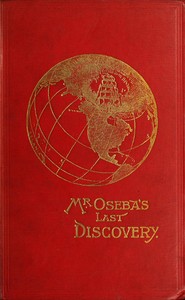
Mr. Oseba's Last Discovery by George W. Bell
Let me set the scene for you. The year is 1903. George W. Bell publishes a book that is, on its surface, a piece of speculative fiction, but it reads like a social study from another star.
The Story
The plot is simple but brilliant. A learned explorer from an advanced, peaceful society named Symmes' Hole has spent his life visiting other worlds. On his final voyage, he discovers Earth. The entire book is his detailed report, presented as a lecture to his curious people back home. Through Mr. Oseba's eyes, we see our own planet dissected. He describes our geography, our endless wars, our strange governments, and our social customs with a mix of scientific curiosity and utter bewilderment. He marvels at our potential but is horrified by our conflicts and inequalities. The tension comes from a simple question: After this grand tour of human folly and achievement, what will his final recommendation be? Is Earth worthy of his utopian people?
Why You Should Read It
This is where the book gets really good. It’s not about flashy aliens or ray guns. It’s a quiet, clever character study of humanity. Oseba is a wonderful narrator—patient, insightful, and often funny in his observations. Reading his report, you can't help but see the absurdities and the beauties of our own world with fresh eyes. Bell was writing at the dawn of the 20th century, commenting on nationalism, women's rights, and social progress, and so much of it still rings true today. It’s a humbling and oddly hopeful experience.
Final Verdict
This book is a hidden gem for anyone who loves classic science fiction with a brain, or for readers who enjoy historical perspectives on society. If you like the idea of Mark Twain's social commentary meeting a Victorian space opera, you'll adore this. It’s perfect for book clubs (so much to discuss!), history buffs curious about turn-of-the-century thought, and sci-fi fans tired of the same old stories. Just be ready for its old-fashioned style—it’s part of the charm. Give it a chapter, and you’ll be hooked on seeing the world through Mr. Oseba's distant, wise eyes.
This historical work is free of copyright protections. Distribute this work to help spread literacy.
Elijah Thomas
1 year agoI have to admit, the atmosphere created is totally immersive. Exactly what I needed.
Sarah Robinson
1 year agoThe layout is very easy on the eyes.
Robert Anderson
1 year agoUsed this for my thesis, incredibly useful.


Charles Martinez
1 year agoClear and concise.