
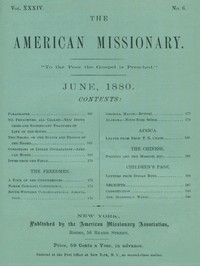
The American Missionary — Volume 34, No. 06, June, 1880 by Various
This isn't a novel. 'The American Missionary — Volume 34, No. 06, June, 1880' is a monthly periodical, a collection of real documents from a pivotal moment. Published by the American Missionary Association, it was a newsletter for its supporters, reporting on their work primarily among African American and Native American communities in the post-Civil War South and West.
The Story
There's no single plot. Instead, you get a mosaic of a nation in transition. You'll read a detailed financial report listing every dollar spent on teacher salaries and school buildings. There are letters from a teacher in a one-room schoolhouse in Tennessee, describing her students' eagerness to learn against a backdrop of local resistance. Another article passionately argues for the rights of Chinese immigrants in California. An obituary mourns a dedicated missionary. It's all business, but the human stories bleed through the formal language. The 'story' is the day-to-day effort to turn the promise of emancipation and equality into a lived reality, against immense economic and social obstacles.
Why You Should Read It
Reading this feels like listening in on a private conversation from 1880. The insight comes from the unvarnished details. You see the cost of a pound of nails for a new school, the names of donors who gave $5, the specific textbooks ordered. This granularity makes the past tangible. You're not reading a historian's summary; you're seeing the raw material they later interpret. It challenges the simplified version of history we often get. These writers were flawed, products of their time, yet their commitment is undeniable. Their arguments about race, education, and national duty echo debates we're still having today, which is both fascinating and a little unsettling.
Final Verdict
This is perfect for history buffs who want to get their hands dirty with primary sources, or for anyone curious about the roots of America's ongoing conversations about race and justice. It's not a light read—the 19th-century prose takes some getting used to—but it's a profoundly rewarding one. Think of it as an archaeological dig in print form. You won't find a neat narrative, but you will find the real, complicated, and powerful soil from which our present grew.
This masterpiece is free from copyright limitations. Distribute this work to help spread literacy.
Mark Lee
1 year agoI stumbled upon this title and the plot twists are genuinely surprising. Exactly what I needed.
Thomas Sanchez
1 year agoBased on the summary, I decided to read it and the plot twists are genuinely surprising. Thanks for sharing this review.
Barbara Hill
8 months agoSolid story.
Michael Lopez
11 months agoClear and concise.






Elijah Ramirez
1 year agoIf you enjoy this genre, it provides a comprehensive overview perfect for everyone. I learned so much from this.