
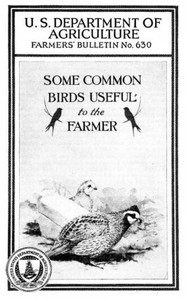
Some Common Birds Useful to the Farmer (1926 edition) by F. E. L. Beal
Published by the U.S. Department of Agriculture, this 1926 bulletin is less a storybook and more a compelling report from the front lines of early 20th-century ecology. Foster Ellenborough Lascelles Beal wasn't a poet; he was a federal economic ornithologist. His job was to figure out if birds were an agricultural asset or a liability.
The Story
There's no traditional plot, but there is a clear narrative drive: the quest for proof. Beal methodically presents his case, bird by bird. For over 30 species—from the familiar Robin and Bluebird to various woodpeckers and sparrows—he lays out the data. He shares the shocking results of stomach content analyses, showing exactly what percentage of each bird's diet was made up of harmful insects, weed seeds, and, yes, sometimes valuable grain. The book is structured as a series of profiles, each one a mix of scientific observation, practical advice on attracting the helpful birds, and frank warnings about the few genuinely troublesome species. The 'conflict' is the age-old battle between farmer and pest, and Beal positions the birds as crucial, natural allies in that fight.
Why You Should Read It
What makes this old government pamphlet so engrossing is its sense of discovery. You can feel Beal's quiet excitement as he presents facts that must have been revolutionary at the time. Learning that a single chickadee might eat several hundred insect eggs in a day, or that woodpeckers are master borers hunting grubs under the bark, turns these common birds into superheroes. It reframes your entire view of nature. This isn't romanticism; it's hard numbers used to build a case for conservation and common sense. Reading it today, it’s a fascinating snapshot of a time when science was actively working to mend the relationship between people and the environment, one bird stomach at a time.
Final Verdict
This is a perfect read for the naturally curious—gardeners, backyard birdwatchers, history lovers, or anyone interested in the roots of the modern environmental movement. It's not a casual novel, but it's surprisingly accessible. If you enjoy podcasts or articles that uncover the hidden science in everyday life, you'll get a kick out of this. Think of it as a primary source that's both educational and quietly inspiring. It proves that sometimes, the most impactful stories aren't fiction; they're reports from the field, written with a clear purpose and a deep respect for the natural world.
This historical work is free of copyright protections. It is available for public use and education.
Mason Taylor
9 months agoHonestly, the storytelling feels authentic and emotionally grounded. I learned so much from this.
Betty King
1 year agoGreat reference material for my coursework.
Joshua Taylor
6 months agoGreat digital experience compared to other versions.
Emma Lewis
1 year agoI was skeptical at first, but the author's voice is distinct and makes complex topics easy to digest. One of the best books I've read this year.


Paul Martinez
8 months agoSolid story.