
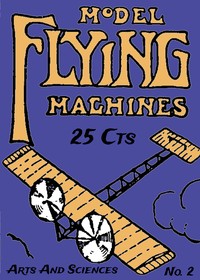
Model Flying Machines by Alfred Powell Morgan
Let's clear the air first: Model Flying Machines is exactly what it sounds like. It's a practical, illustrated guide from the early 20th century on how to design, build, and fly model aircraft. Think detailed diagrams for rubber-band-powered planes, explanations of aerodynamics in plain language, and that wonderful, hands-on spirit of early engineering hobbies. The content is straightforward, methodical, and written with the clear intent of getting you from a pile of wood and paper to a machine that soars.
The Story
There isn't a narrative plot here. The "story" is in the doing. Alfred Powell Morgan, a respected figure in model engineering circles of his day, walks you through the entire process. He starts with the basic principles of flight—lift, thrust, drag—and then dives into construction. You'll get chapters on choosing materials, carving propellers, balancing the frame, and finally, adjusting your creation for its maiden voyage in a park or field. It's a snapshot of a pre-digital era where patience and precision were the only tools you needed to touch the sky, even in miniature.
Why You Should Read It
I love this book for two reasons. First, it's a beautiful piece of technical history. The instructions are timeless, and there's a profound satisfaction in following steps laid out a century ago and still having them work. Second, and more intriguingly, is the mystery of the 'Unknown' authorship. Holding a book where the expert's knowledge is preserved but his credit is missing feels strangely poignant. It makes you appreciate the work itself more and serves as a quiet reminder of how easily details can slip away. Reading it, you're not just learning to build a model; you're piecing together a bit of forgotten passion.
Final Verdict
This one's for a specific but wonderful audience. It's perfect for model-building enthusiasts, history of technology nerds, and anyone who enjoys tangible, analog projects. If you're looking for a fast-paced novel, look elsewhere. But if you've ever wanted to understand the 'how' behind early flight or need a fascinating primary source for a project, this book is a hidden gem. Just be prepared to spend as much time wondering about the name on the cover as you do following the diagrams inside.
This historical work is free of copyright protections. Distribute this work to help spread literacy.
Michael Hernandez
10 months agoThe clarity of the introduction set high expectations, and the argument presented in the middle section is particularly compelling. A perfect balance of theory and practical advice.
Jessica Jones
1 year agoSimply put, the narrative structure is incredibly compelling. This story will stay with me.
Sarah Harris
8 months agoThe fonts used are very comfortable for long reading sessions.
Donna Robinson
1 year agoAs someone who reads a lot, the arguments are well-supported by credible references. I would gladly recommend this title.



Richard Martin
3 months agoLooking at the bibliography alone, the data points used to support the main thesis are quite robust. I'll be recommending this to my students and colleagues alike.